Certified Diagnostic Care
Book trusted and affordable diagnostic tests with our NABL certified labs.

A Holter monitor is an invaluable tool for diagnosing heart rhythm problems that don’t appear during a routine ECG. By providing continuous monitoring, it gives doctors a clearer picture of your heart’s performance in everyday life.
Have you ever experienced irregular heartbeats, dizziness, or unexplained chest discomfort, only for everything to look normal during a standard ECG? That’s because heart rhythm issues often come and go, and a short test may miss them.
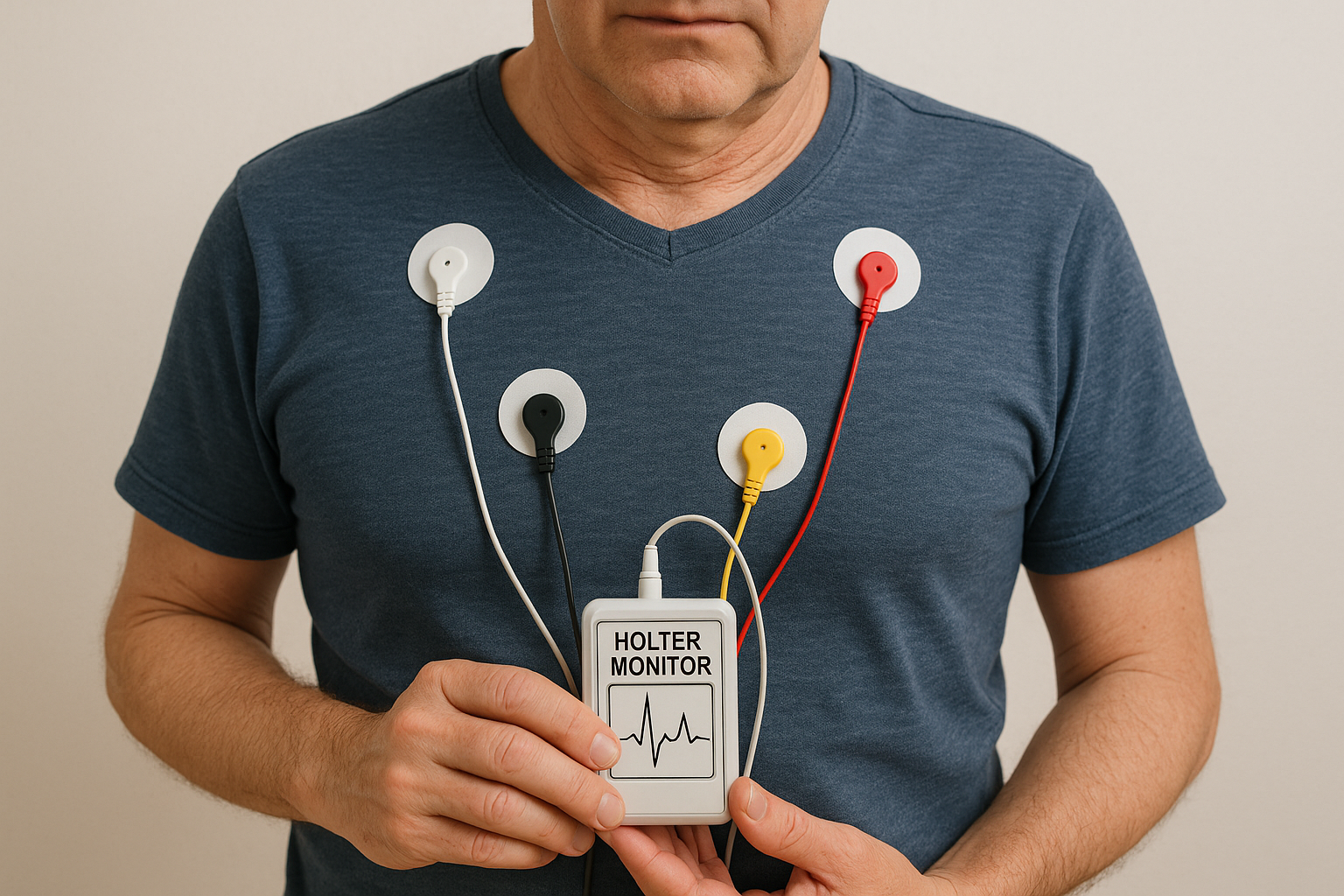
This is where a Holter monitor comes in. A Holter monitor is a small, portable device that records your heart’s electrical activity continuously for 24–48 hours (or longer). It gives doctors a real-world picture of how your heart functions during daily activities, sleep, work, and exercise.
In this article, we’ll explain what a Holter monitor is, how it works, why it’s used, and what you can expect during the test.
A Holter monitor is a portable version of an ECG (Electrocardiogram) that records your heart’s activity for an extended period.
Doctors often recommend a Holter test when:
📊 According to the American Heart Association, Holter monitoring detects arrhythmias in up to 60% of patients who show no abnormalities on a routine ECG.
Step-by-step process:
👉 The test is painless, though wearing the device continuously may feel slightly uncomfortable.