Health packages
Add Member
Provide email & phone to receive medical reports and notifications.

Book your Appointment!
Icon Select Test
Icon
Not sure what you need?
+91 88005 80075
Let us know your health conditions. Our health advisor guide you.
Back SERVICES

PET SCAN

A PET scan is one of the most advanced imaging techniques available today. By showing both the structure and function of tissues, it provides valuable insights that other scans cannot. From cancer detection to brain and heart monitoring, PET scans are a crucial tool in modern healthcare.
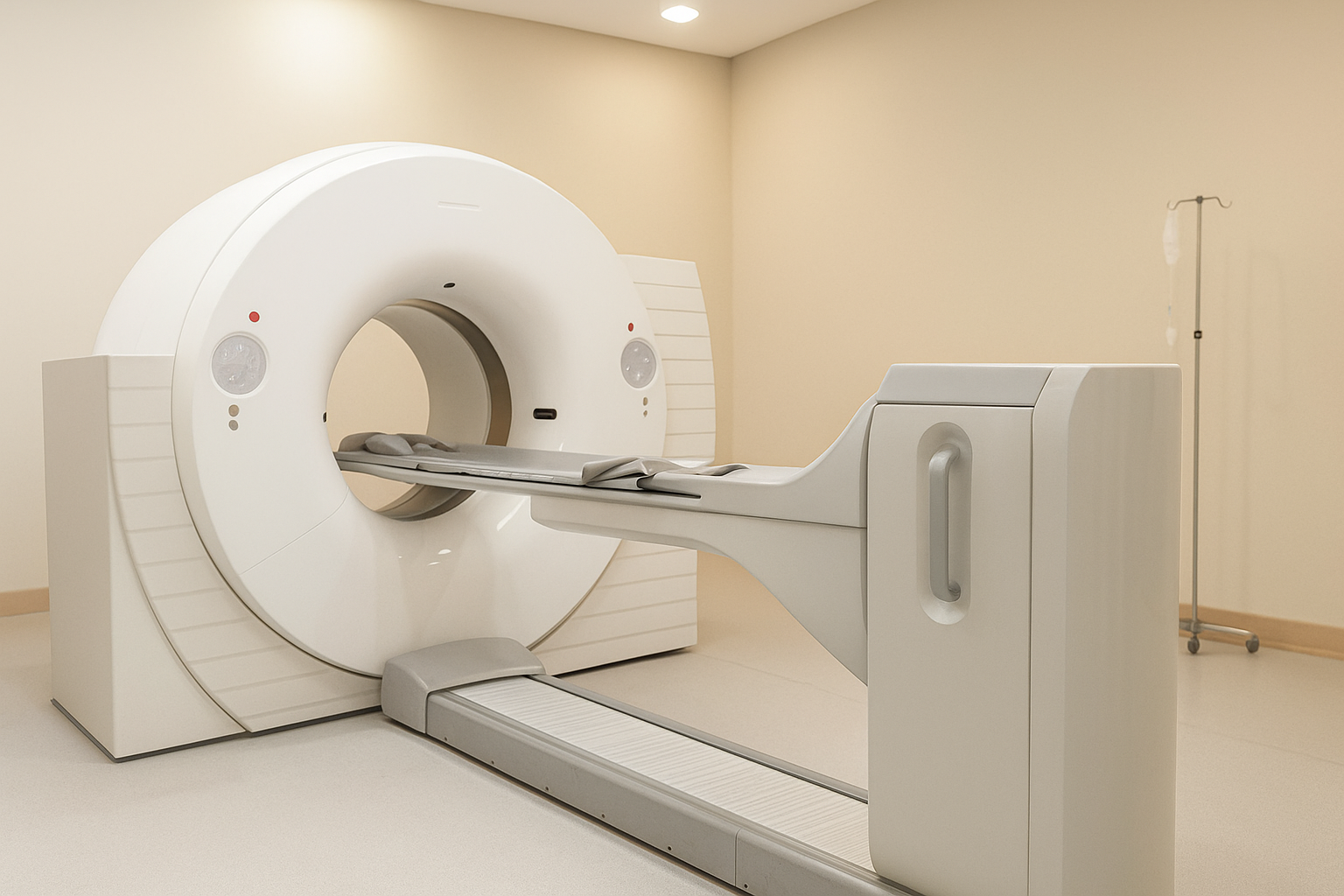
Advanced Nuclear Imaging
Early Cancer Detection
Whole-Body Scan
Specialist Radiology Report
PET SCAN

PET Scan: A Complete Guide to Advanced Medical Imaging

When it comes to diagnosing and monitoring diseases, doctors rely on advanced imaging techniques to see what’s happening inside the body. One such powerful tool is the PET scan (Positron Emission Tomography scan). Unlike regular X-rays or CT scans, a PET scan shows not just the structure of organs but also how they are functioning at the cellular level.

This makes PET scans especially useful in detecting cancer, monitoring heart conditions, and studying brain disorders. In this guide, we’ll explain what a PET scan is, how it works, its uses, benefits, risks, and what you can expect during the procedure.

What is a PET Scan? +

A PET scan (Positron Emission Tomography) is a type of imaging test that uses a small amount of radioactive substance (called a tracer) to show how organs and tissues are working.

  • It helps detect abnormal metabolic activity, which often signals diseases like cancer.
  • PET scans are often combined with CT or MRI for even more detailed images.
How Does a PET Scan Work? +

The PET scan works in a few simple steps:

  1. Tracer Injection: A radioactive sugar-like substance is injected into the bloodstream.
  2. Absorption: Cells absorb the tracer—active or diseased cells (like cancer) take up more.
  3. Imaging: The PET scanner detects this activity and creates 3D images.

This shows doctors where abnormal cells are located and how active they are.

Why is a PET Scan Done? +

Doctors recommend PET scans for different conditions, including:

  • Cancer detection and staging: Identifies tumors, spread of cancer, and treatment response.
  • Heart disease: Shows blood flow and detects damaged heart tissue after a heart attack.
  • Neurological disorders: Helps diagnose Alzheimer’s, Parkinson’s, epilepsy, and brain tumors.
  • Monitoring treatment: Evaluates how well chemotherapy or other therapies are working.
What should a patient expect during a PET scan procedure? +

Before the Scan

  • You may need to fast for 4–6 hours.
  • Avoid strenuous exercise before the test.
  • Inform your doctor if you’re pregnant, breastfeeding, or diabetic.

During the Scan

  • The tracer is injected, and you may wait 30–60 minutes for it to spread.
  • You’ll lie on a table that slides into the scanner.
  • The machine takes images for 20–40 minutes.

After the Scan

  • You can return to normal activities.
  • Drink plenty of water to flush out the tracer.
  • Results are analyzed by a radiologist and shared with your doctor.
What are the Benefits of a PET Scan? +
  • Detects diseases at an early stage.
  • Provides functional and metabolic information, not just structural.
  • Helps plan precise treatment strategies.
  • Non-invasive and safe when used correctly.
  • Often combined with CT or MRI for maximum accuracy.
What are the Risks and Limitations of a PET Scan? +
  • Radiation exposure: Very low and generally safe, but not recommended for pregnant women.
  • Allergic reactions: Rare, but possible with the tracer.
  • High cost: More expensive compared to X-rays or ultrasounds.
  • Limited availability: Not all hospitals have PET scan facilities.
Add Member
Provide email & phone to receive medical reports and notifications.