Health packages
Add Member
Provide email & phone to receive medical reports and notifications.

Book your Appointment!
Icon Select Test
Icon
Not sure what you need?
+91 88005 80075
Let us know your health conditions. Our health advisor guide you.
Back SERVICES

Sleep Study

A sleep study is a powerful tool for diagnosing sleep disorders that often go unnoticed but can seriously affect your health. If you struggle with poor sleep, loud snoring, or constant fatigue, talk to your doctor about scheduling a sleep study.
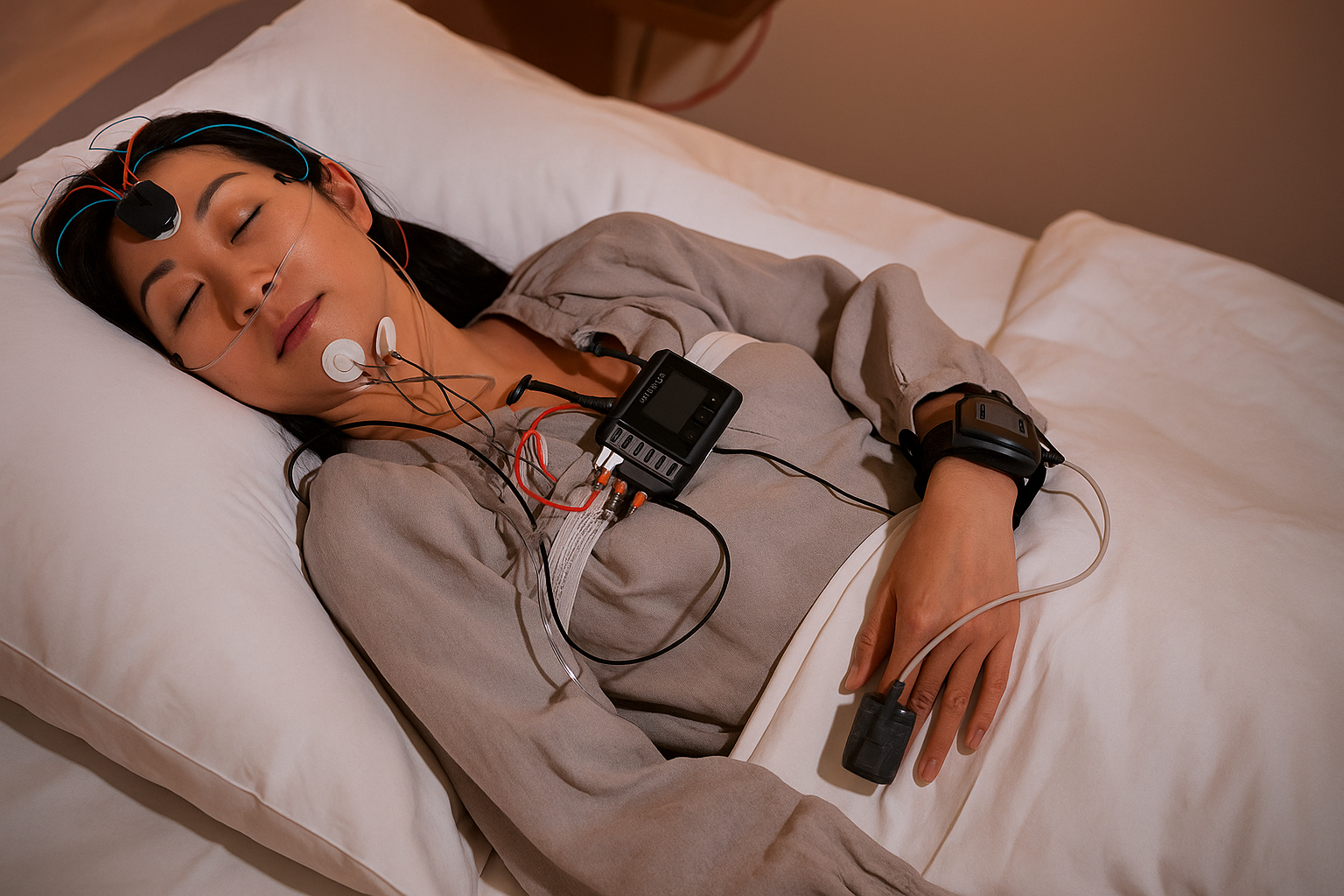
Monitors Sleep Patterns
Detects Sleep Disorders
Non-Invasive & Comfortable
Expert Sleep Specialist Report
Sleep Study

Sleep Study: What It Is and Why It Matters for Your Health

Do you wake up feeling tired even after a full night’s sleep? Do you snore loudly or struggle with daytime fatigue? These could be signs of an underlying sleep disorder—and that’s where a sleep study comes in.

A sleep study, also known as polysomnography, is a painless test that helps doctors understand your sleep patterns and diagnose conditions like sleep apnea, insomnia, restless legs syndrome, and narcolepsy. In this blog, we’ll explain what a sleep study is, how it works, what to expect, and why it’s important for your overall health.

What is a Sleep Study? +

A sleep study is an overnight test that records brain waves, oxygen levels, heart rate, breathing, and body movements while you sleep. The goal is to evaluate how well you sleep and identify sleep-related problems.

Common Disorders Diagnosed Through Sleep Studies

  • Obstructive Sleep Apnea (OSA): Repeated pauses in breathing during sleep
  • Insomnia: Difficulty falling or staying asleep
  • Narcolepsy: Excessive daytime sleepiness and sudden sleep attacks
  • Restless Legs Syndrome (RLS): Uncomfortable leg sensations that disrupt sleep

Parasomnias: Sleepwalking, night terrors, or unusual behaviors during sleep

Why is a Sleep Study Important? +
  • Improves diagnosis: Identifies underlying sleep disorders
  • Guides treatment: Helps doctors recommend CPAP machines, lifestyle changes, or medications
  • Prevents complications: Untreated sleep disorders can increase the risk of heart disease, stroke, diabetes, and depression
  • Boosts quality of life: Better sleep means more energy, sharper focus, and improved mood

📊 Fact: According to the American Sleep Apnea Association, an estimated 22 million Americans suffer from sleep apnea, with 80% of cases undiagnosed.

What are the types of sleep studies? +

1. In-Lab Sleep Study (Polysomnography)

  • Conducted overnight in a sleep clinic or hospital
  • Monitors multiple body functions with sensors and cameras
  • Best for complex sleep disorders

2. Home Sleep Apnea Test (HSAT)

  • Done at home using portable equipment
  • Records breathing, oxygen levels, and heart rate
  • Convenient but limited to diagnosing sleep apnea
How to Prepare for a Sleep Study? +
  • Avoid caffeine and alcohol on the day of the test
  • Wash your hair (no oils, sprays, or gels) so sensors stick properly
  • Bring comfortable sleepwear and personal items
  • Follow your regular bedtime routine as much as possible
What Happens During a Sleep Study? +
  • You’ll be connected to sensors that monitor brain activity, eye movements, heart rate, oxygen levels, and muscle activity
  • A sleep technician observes your sleep throughout the night
  • The test is painless, though sleeping with wires may feel unusual
  • Results are analyzed by a sleep specialist who creates a treatment plan if needed
What are the Benefits of a Sleep Study? +
  • Detects hidden sleep problems
  • Improves health by reducing risks linked to poor sleep
  • Helps tailor treatments for better sleep quality
  • Provides peace of mind with a clear diagnosis


What are the Possible Risks or Discomforts of Sleep Study? +
  • Minor skin irritation from adhesive sensors
  • Difficulty falling asleep in a lab setting
  • Home tests may provide limited data compared to full polysomnography


Add Member
Provide email & phone to receive medical reports and notifications.