Certified Diagnostic Care
Book trusted and affordable diagnostic tests with our NABL certified labs.

The VER/VEP test is a simple yet powerful tool for detecting problems in the visual pathways. By recording how your brain responds to visual signals, it helps doctors identify eye and neurological conditions early often before symptoms become severe.
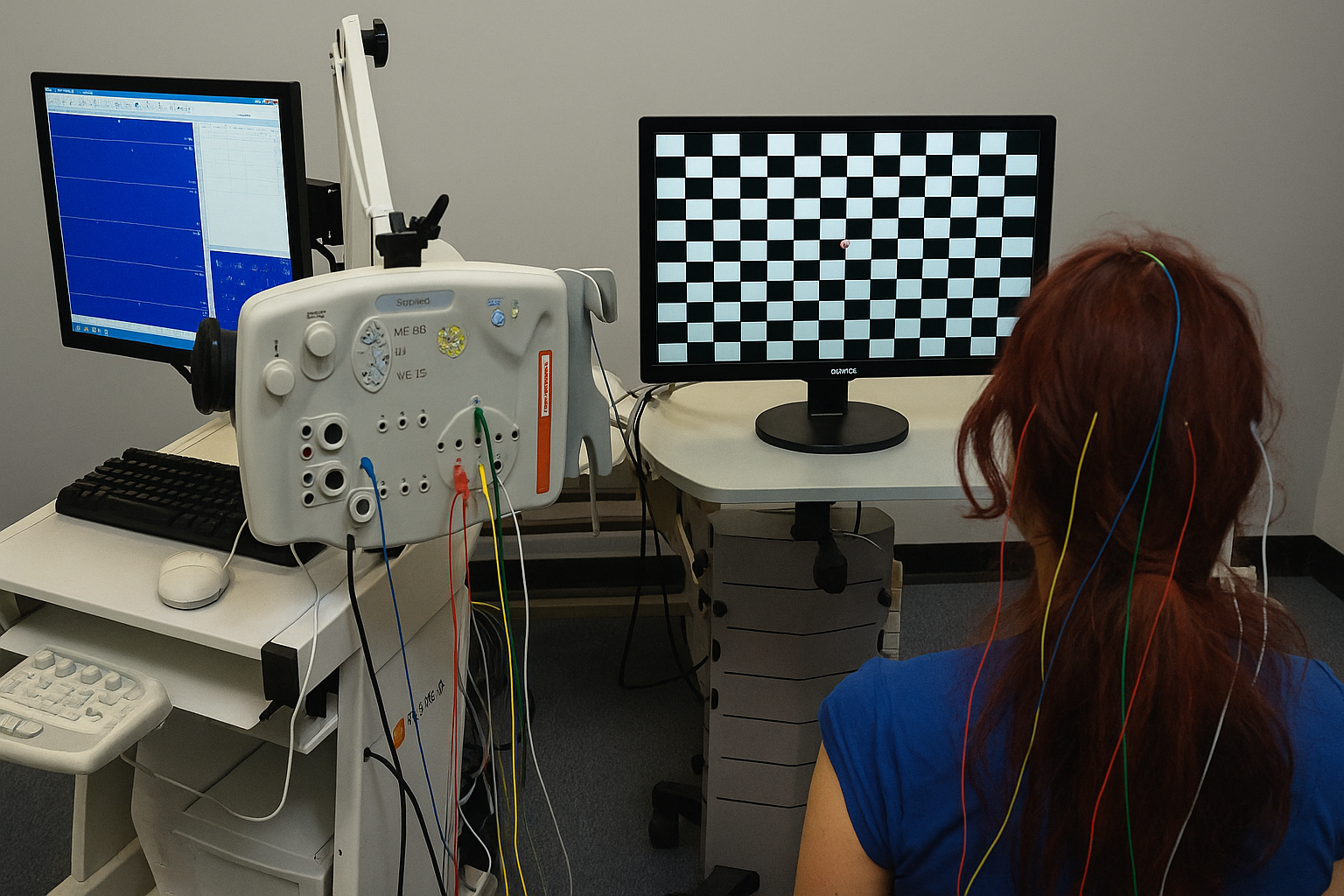
Have you ever wondered how doctors can measure how well your brain responds to what your eyes see? That’s exactly what a VER/VEP test does.
VER (Visual Evoked Response) or VEP (Visual Evoked Potential) is a simple, non-invasive test used to check the visual pathways between your eyes and brain. It plays a crucial role in diagnosing and monitoring eye and neurological conditions.
The VER/VEP test measures the brain’s electrical activity in response to visual stimuli, such as flashing lights or patterned images.
This test helps determine if there are problems with the optic nerves or visual pathways that carry signals from your eyes to your brain.
Doctors may recommend a VER/VEP test to:
📊 Fact: Studies show that VEP testing can detect optic nerve dysfunction even before symptoms of vision loss appear.
The Process
Preparation
Electrodes are placed on your scalp (similar to an EEG).
You’ll sit in front of a screen displaying checkerboard patterns or flashing lights.
Stimulation
The patterns or flashes stimulate your visual system.
The electrodes record how quickly and effectively your brain responds.
Analysis
The recorded signals are analyzed to see if they fall within normal response times.
Delayed or weak responses may indicate nerve damage or disease.
💡 Tip: Bring your glasses or contact lenses if you use them, since clear vision ensures accurate results.