Health packages
Add Member
Provide email & phone to receive medical reports and notifications.

Book your Appointment!
Icon Select Test
Icon
Not sure what you need?
+91 88005 80075
Let us know your health conditions. Our health advisor guide you.
Back SERVICES

EMG

The EMG test is an essential tool for diagnosing muscle and nerve problems. While it may cause slight discomfort, its benefits in identifying serious conditions far outweigh the risks.
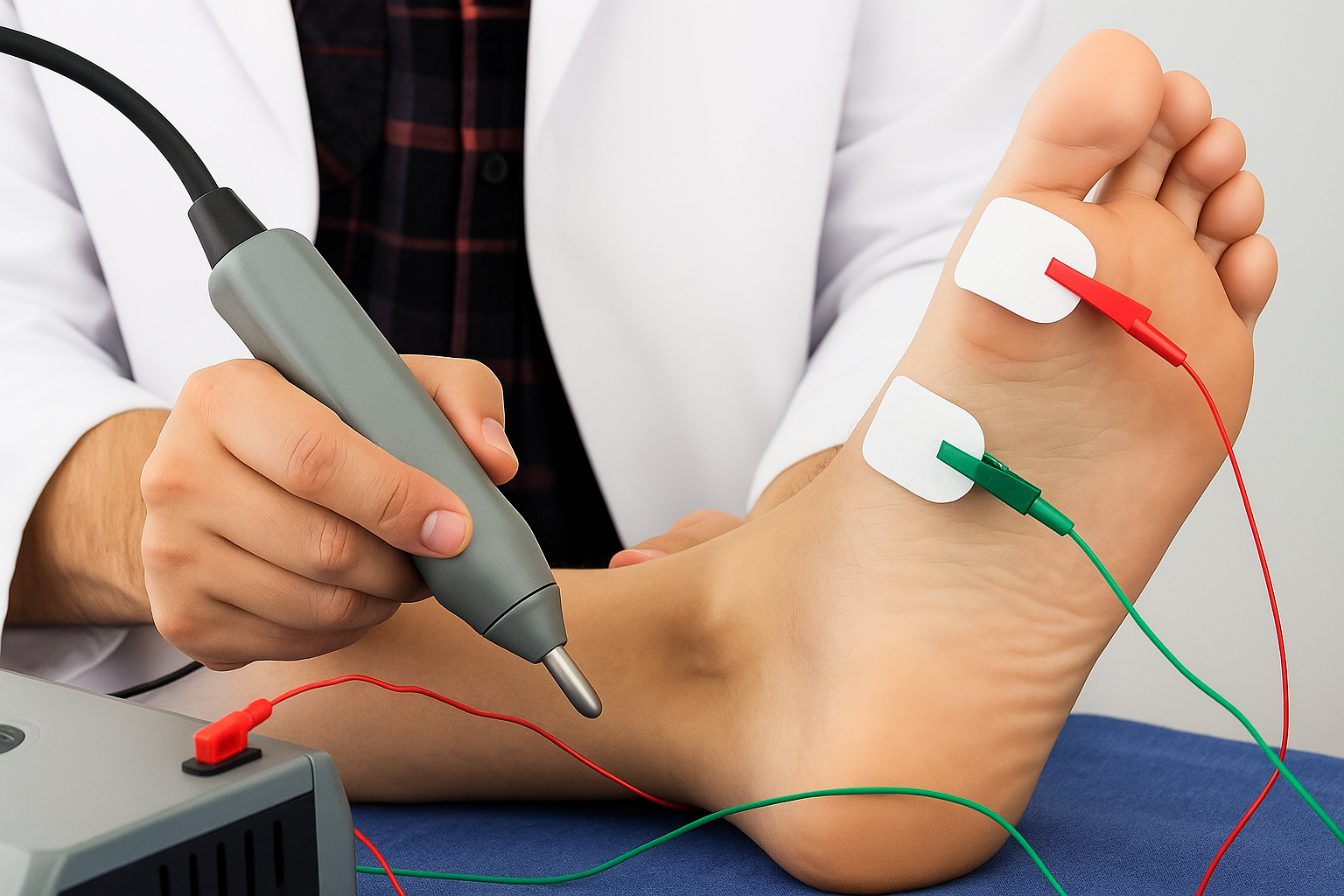
Muscle Activity Check
Nerve & Muscle Diagnosis
Safe & Reliable Test
Expert Neurology Report
EMG

EMG Test: A Complete Guide to Electromyography

Do you often experience muscle weakness, numbness, or unexplained pain? These could be signs of nerve or muscle disorders. To identify the root cause, doctors may recommend an EMG test (Electromyography).

The EMG test is a powerful diagnostic tool that helps measure muscle and nerve health. It plays a crucial role in detecting conditions like neuropathy, muscular dystrophy, or spinal issues. In this guide, we’ll explain what an EMG is, how it works, why it’s done, and what you can expect during the procedure.

What is an EMG Test? +

Electromyography (EMG) is a diagnostic test that measures the electrical activity of muscles.

  • Muscles produce tiny electrical signals when they contract.
  • EMG records these signals to check if muscles and the nerves controlling them are functioning properly.
  • It is often performed alongside Nerve Conduction Velocity (NCV) tests for a complete evaluation.
Why is an EMG Test Important? +

Doctors recommend EMG when you have symptoms such as:

  • Muscle weakness or twitching
  • Numbness or tingling in arms or legs
  • Unexplained muscle pain
  • Frequent cramps

Common conditions diagnosed with EMG:

  • Peripheral neuropathy (common in diabetes)
  • Carpal tunnel syndrome
  • Herniated discs or pinched nerves
  • Amyotrophic Lateral Sclerosis (ALS)
  • Muscular dystrophy
  • Radiculopathy (spinal nerve compression)

πŸ“Š Studies suggest that EMG combined with NCV increases diagnostic accuracy by up to 30% compared to using one test alone.

How is an EMG Test Performed? +

An EMG is a straightforward procedure, usually lasting 30–60 minutes.

Step-by-step procedure:

  1. Preparation – The skin over the muscle is cleaned.
  2. Needle electrodes – A thin, sterile needle is inserted into the muscle.
  3. Recording – The electrode picks up electrical signals while the muscle is at rest and during contraction.
  4. Analysis – The machine records wave patterns, which are interpreted by a neurologist.

πŸ‘‰ You may feel mild discomfort or a quick pinching sensation during needle insertion.

What are the Benefits of an EMG Test? +
  • Detects nerve and muscle disorders early.
  • Helps doctors differentiate between nerve vs muscle problems.
  • Assists in planning effective treatment or surgery.
  • Can monitor progression of chronic conditions.
What are the Risks and Limitations of EMG Test? +

While generally safe, there are some considerations:

  • Minor discomfort or bruising at the needle site.
  • Not suitable for patients with bleeding disorders or on blood thinners (without medical guidance).
  • Limited in detecting very early or subtle nerve issuesβ€”may require additional tests.
How to Prepare for an EMG Test? +
  • Avoid applying lotions, creams, or oils on test day.
  • Wear loose, comfortable clothing.
  • Inform your doctor about blood-thinning medications or pacemakers.
  • You can eat and drink normally before the test.


Add Member
Provide email & phone to receive medical reports and notifications.