Health packages
Add Member
Provide email & phone to receive medical reports and notifications.

Book your Appointment!
Icon Select Test
Icon
Not sure what you need?
+91 88005 80075
Let us know your health conditions. Our health advisor guide you.
Back SERVICES

X-Ray

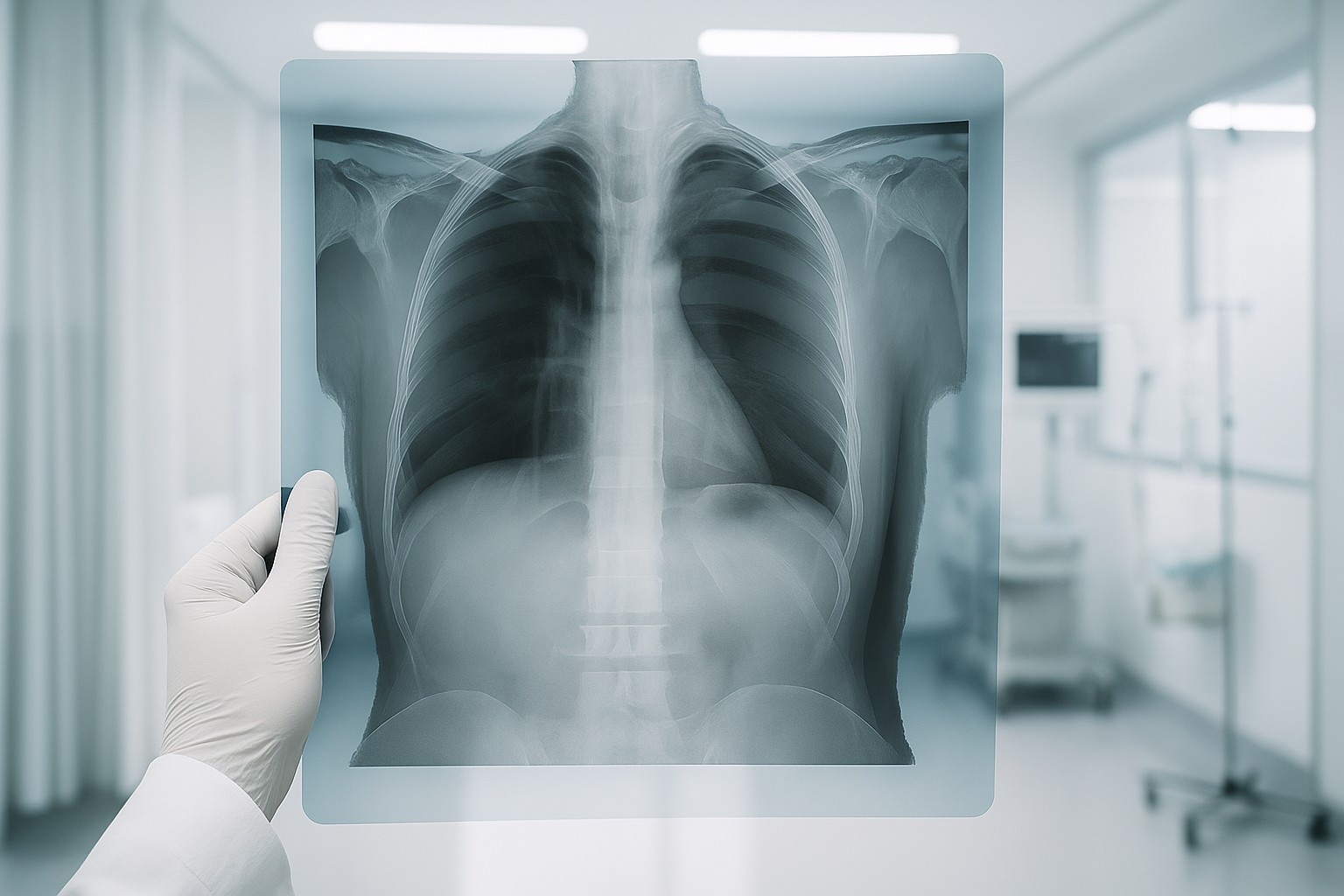
The X-ray remains one of the most essential diagnostic tools in modern healthcare. It is quick, affordable, and effective in detecting a wide range of medical conditions. While there are minor risks due to radiation, the benefits often far outweigh them.
Quick & Painless Imaging
Detects Bone & Chest Issues
Low Radiation Dose
Expert Radiologist Report
X-Ray

X-Ray: A Complete Guide to Medical Imaging

When you think of quick and reliable medical tests, the X-ray often comes to mind. For over a century, X-rays have been a cornerstone in diagnostic imaging, helping doctors look inside the human body without surgery. From identifying broken bones to detecting lung infections, X-rays remain one of the most common and effective imaging tools used worldwide.

What is an X-Ray? +

An X-ray is a painless medical imaging test that uses a small amount of radiation to produce images of the inside of the body. These images show differences in tissue density, making bones, organs, and foreign objects visible on film or digital screens.

  • Dense materials (like bones and teeth) appear white.
  • Softer tissues (like muscles and fat) appear in shades of gray.
  • Air-filled areas (like lungs) appear black.
How Does an X-Ray Work? +

X-rays use electromagnetic radiation. When X-ray beams pass through the body:

  1. Different tissues absorb radiation at different rates.
  2. The remaining rays are captured on a detector or film.
  3. A clear image is created for medical examination.

This simple yet powerful process allows doctors to quickly diagnose medical conditions.

Why is an X-Ray Done? +

Doctors may recommend an X-ray for a variety of reasons, such as:

  • Bone injuries – fractures, dislocations, and arthritis.
  • Chest conditions – pneumonia, tuberculosis, or lung cancer.
  • Dental issues – cavities, impacted teeth, and infections.
  • Abdominal problems – swallowed objects, kidney stones, or intestinal blockages.
  • Breast screening – mammography uses X-rays to detect breast cancer.
What are the different types of X-rays? +

Different types of X-rays are used depending on the part of the body being examined:

1. Chest X-Ray

Used to check lungs, heart, and chest cavity conditions.

2. Bone X-Ray

Detects fractures, bone infections, and osteoporosis.

3. Dental X-Ray

Helps dentists find cavities, abscesses, or tooth alignment problems.

4. Mammogram

Special X-ray of the breast to screen for tumors and cancer.

5. Abdominal X-Ray

Shows problems in the stomach, intestines, and kidneys.

What to Expect During an X-Ray? +

If it’s your first X-ray, here’s what typically happens:

  • Before the Test:
  • You may need to remove jewelry or metal objects.
  • Sometimes, you’ll wear a lead apron to protect other parts of your body.
  • During the Test:
  • You’ll be asked to sit, stand, or lie still while the X-ray is taken.
  • The procedure is quick and painless, often lasting just a few minutes.
  • After the Test:
  • You can return to normal activities immediately.
  • A radiologist will analyze the images and share results with your doctor.
What are the Benefits of an X-Ray? +
  • Fast and widely available.
  • Non-invasive and painless.
  • Provides immediate results in emergencies.
  • Helps in early detection of diseases.
  • Cost-effective compared to other imaging methods.
What are the risks and limitations of X-rays? +

While X-rays are generally safe, some points to consider include:

  • Radiation exposure: Very low, but repeated exposure should be minimized.
  • Pregnancy concerns: Not usually recommended for pregnant women unless necessary.
  • Soft tissue limitations: MRI or CT scans may be better for detailed soft tissue imaging.
Add Member
Provide email & phone to receive medical reports and notifications.