Health packages
Add Member
Provide email & phone to receive medical reports and notifications.

Book your Appointment!
Icon Select Test
Icon
Not sure what you need?
+91 88005 80075
Let us know your health conditions. Our health advisor guide you.
Back SERVICES

PFT

The Pulmonary Function Test (PFT) is a safe, non-invasive, and highly effective way to assess your lung health. Whether you have existing respiratory issues or want to ensure your lungs are functioning properly, a PFT provides valuable insights that can guide your treatment and lifestyle choices.
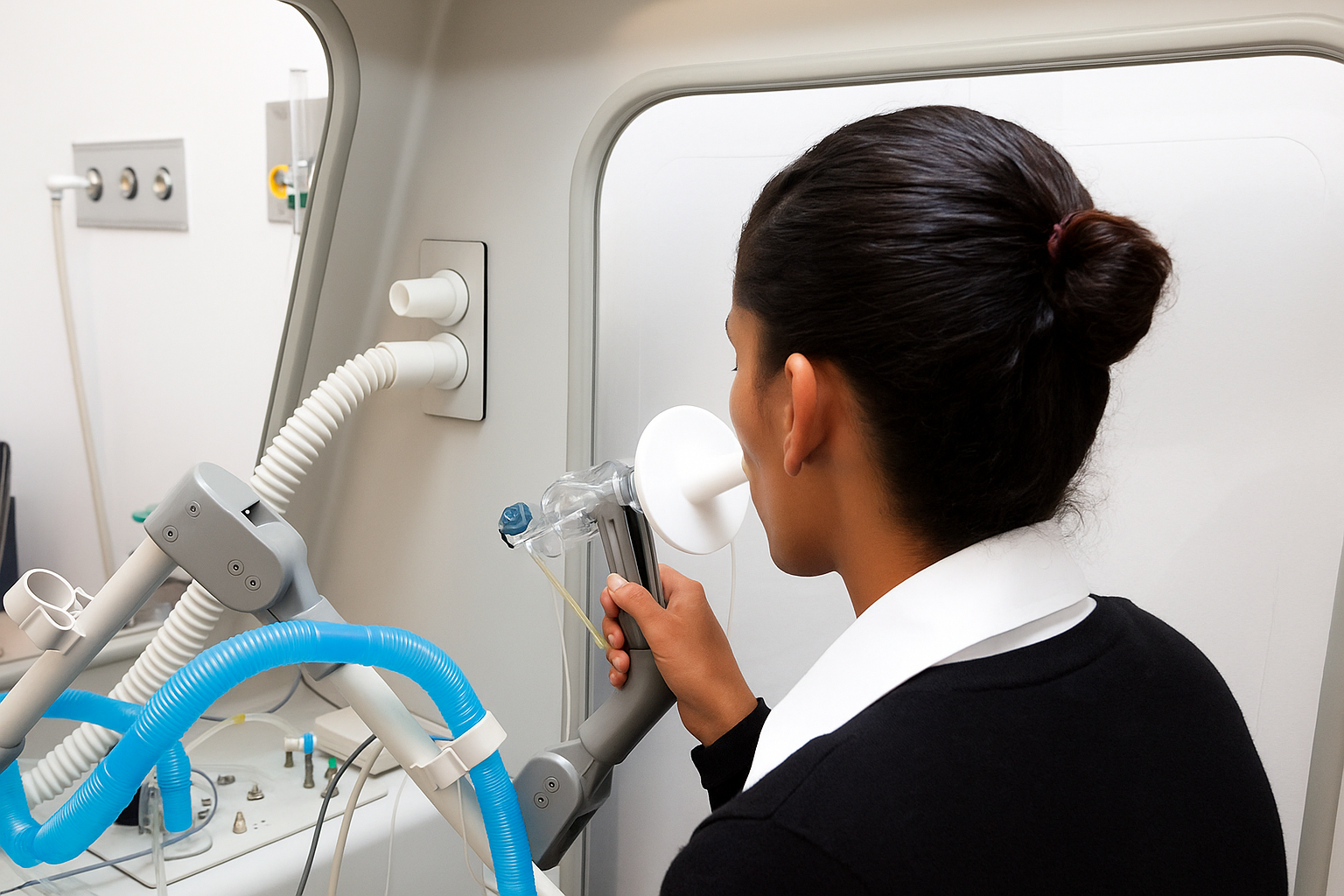
Lung Health Check
Detects Respiratory Issues
Non-Invasive & Safe
Expert Pulmonologist Report
PFT

Pulmonary Function Test (PFT): A Complete Guide to Healthy Lungs

Breathing is something we do every second without thinkingβ€”but have you ever wondered how healthy your lungs really are? A Pulmonary Function Test (PFT) is one of the most reliable ways to measure lung capacity, airflow, and overall respiratory health.

Whether you’re experiencing shortness of breath, managing asthma, or preparing for surgery, PFTs provide critical insights into how well your lungs are working.

What is a Pulmonary Function Test (PFT)? +

A Pulmonary Function Test is a group of non-invasive breathing tests that measure:

  • Lung capacity (how much air your lungs can hold)
  • Airflow (how quickly you can move air in and out)
  • Gas exchange efficiency (how well oxygen enters and carbon dioxide leaves your blood)

Doctors often recommend PFTs for diagnosing and monitoring asthma, COPD, chronic bronchitis, emphysema, and other lung conditions.

What are the different types of pulmonary function tests? +

PFT is not just for people with breathing problemsβ€”it can also help:

  • Detect early signs of lung disease before symptoms worsen
  • Assess lung health before surgery
  • Monitor the effectiveness of treatment for chronic respiratory conditions
  • Evaluate occupational exposure to dust, chemicals, or smoke

πŸ“Š According to the American Lung Association, over 34 million Americans live with chronic lung disease, and PFTs play a vital role in early diagnosis.

Who should get a Pulmonary Function Test? +

1. Spirometry

  • Measures how much air you inhale and exhale.
  • Commonly used for asthma and COPD diagnosis.

2. Lung Volume Test

  • Assesses the total amount of air your lungs can hold.
  • Helps detect restrictive lung diseases.

3. Diffusion Capacity Test

  • Measures how efficiently oxygen moves from your lungs into your blood.
  • Important for detecting conditions like pulmonary fibrosis.

4. Plethysmography

  • A more advanced test to measure lung volumes.
  • Often used when standard spirometry is not enough.
How to Prepare for a PFT? +

To get accurate results, follow these tips:

  • 🚭 Avoid smoking for at least 4–6 hours before the test.
  • 🚫 Skip heavy meals that may make breathing difficult.
  • πŸ’Š Check with your doctor about pausing inhalers or medications.
  • πŸ‘• Wear comfortable clothing to allow free breathing.
What to Expect During the Test? +
  1. You’ll sit upright and breathe into a mouthpiece connected to a machine.
  2. The technician may ask you to inhale deeply, exhale quickly, or hold your breath at times.
  3. The test may be repeated several times for accuracy.

⏱️ Duration: Usually takes 30–60 minutes depending on the number of tests performed.

What are the Benefits of Pulmonary Function Testing? +
  • βœ… Helps in early detection of lung diseases
  • βœ… Tracks progression of respiratory conditions
  • βœ… Guides personalized treatment plans
  • βœ… Provides valuable insights for pre-surgical evaluations
What are the Limitations of PFT? +

While highly useful, PFTs have some limitations:

  • Results may vary based on patient effort during breathing tests.
  • Not suitable for individuals with recent heart attack or severe illness.
  • May require additional tests like CT scans or X-rays for a complete diagnosis.
Add Member
Provide email & phone to receive medical reports and notifications.