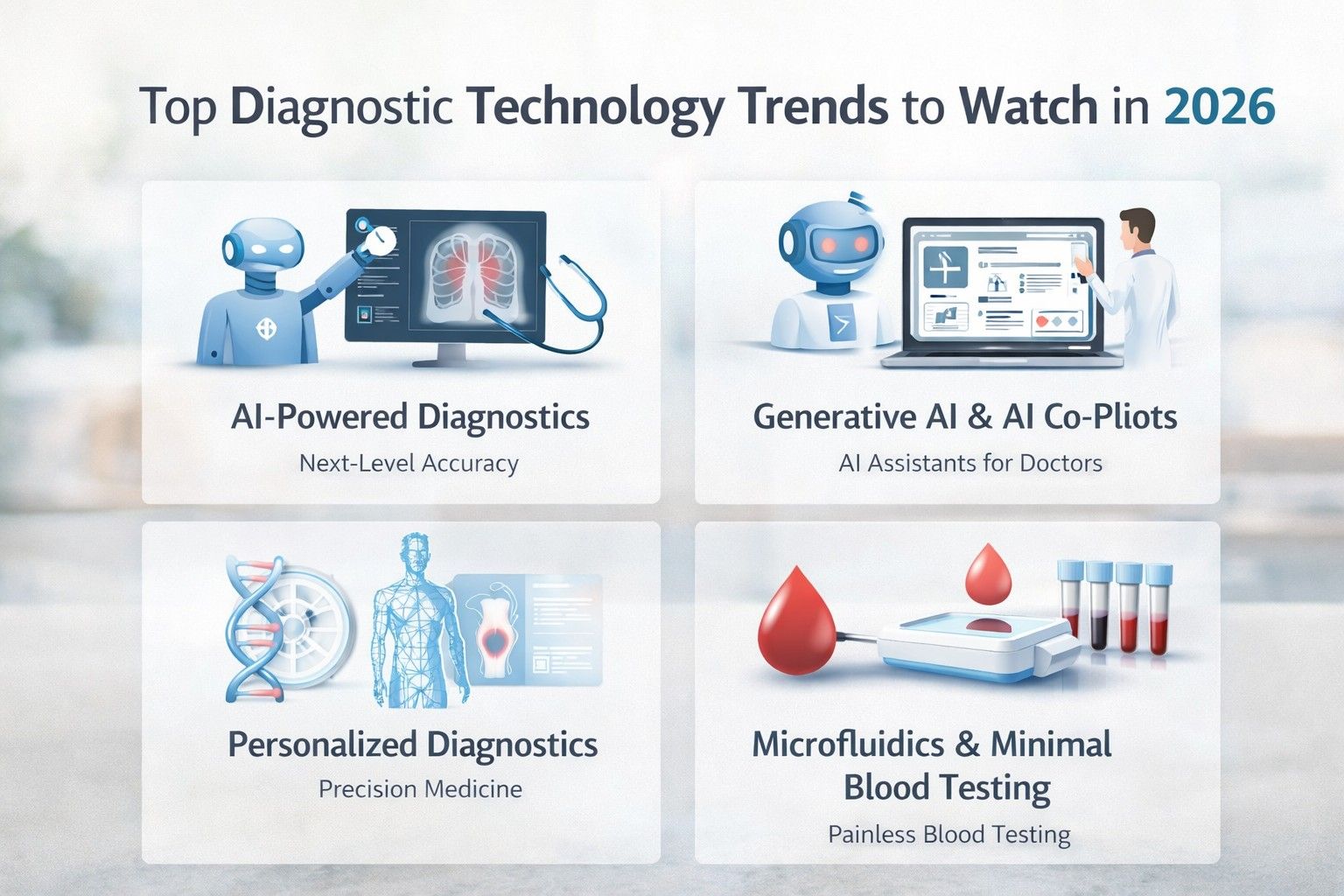
In 2016, the medical industry is undergoing a major transformation with the evolution of the AI assisted tools and technology. Data connectivity, robotics and personalized care coupled with the artificial intelligence (AI) technology has changed the ecosystem of the health care and these devices are again reshaping and designing the world of the medicines and healthcare. The cost is lowered by the use of these techniques and across hospitals; clinics, and homes, innovations are improving outcomes.
The top ten Diagnostic trends to watch in medical filed are:
1. Real Time Remote Monitoring
With the advent of the technology the health care is shifting from the hospitals to the comfort of your home. For the chronic diseases such as diabetes, respiratory issues, hearth health the use of the Remote Patient Monitoring (RPM) devices is changing the con text of the medical health care for the patients and it has grown fast during the last three years. Devices such as smart inhalers, glucose wearables, pulse oximeters, wireless BP monitors and patch based ECG systems send data directly to the health care experts for the analysis of the patients report which in turn reduces the time invested in visiting the hospitals and wait time as well. Many newly added health care startups are using the kits with the apps, sensors and complete dashboard facilities in order to help the patients in their homes itself. Thus it provides both the patients and providers lower cost and better convenience with the use of these Medical Device Trends.
2. AI and Machine Learning assisted technologies
AI is no longer optional. It is a core part of product design and market demand and the development in the field of Artificial Intelligence (AI) and Machine learning have revolutionised the diverse possibilities in the field of healthcare. In 2016 most of the devices in the market are AI embedded for the help of the patients and all these includes the pattern detection, early diseases alerts, workflow automation and image analysis as well. Now AI is doing the tasks in major processes such as, imaging tools, surgical systems, ECG monitors and various pathologies which were previously done by the trained staff only and this is helping to reduce delays and human error. The various aspects of medical practice, from early detection of the diseases to the accurate diagnosis and the planning of the treatment all has been made easy with the evolution of these two domains.
3. Devices With generative AI Support
The use of the data by the clinicians is drastically changing by the evolution of the generative AI support. Quick summaries of patient readings, automated drafting for clinical notes, and clearer explanations for imaging results are now being done by the blink of an eye by the AI assisted technologies. The reports for various tests are now generated within seconds. The next step suggestions and the explanation of the abnormal readings are easily explained by the wearables. The use of this special feature helps to reduce the load of the staff and also improves the decision making of the health care experts.
4. Cybersecurity
With the advent of the technology even the healthcare fields is not unknown to the cyber threats and is increasing at an alarming rate and if not secured the cloud platforms, hospital networks and connected devices are easy targets. Even the addition of the encrypted chips, secure boot, strong identity control, and automated patch systems is done significantly by the manufactures who prepare these devices. Thus the real time unusual behaviour or threat is detected by using the AI technology. The need of the hour which even the hospitals take great care of is having the strong security. When the cyber security is not taken care of these can disrupt the patient care, leading to severe consequences for patients.
5. Virtual Hospitals and Telemedicine
For healthcare systems around the world telemedicine is a rapidly evolving tool and it was first implemented in the year 1950. The implementation of the telemedicine became more feasible with the technological advancement and increasing access to information technology. The role of the telemedicine has changed drastically because of the advancements in the technology of networks and interfaces. Telemedicine is now accepted as an established part of everyday healthcare practice such as in the cardiology, dermatology, oncology, and pre- and postoperative surgical care. The increasing use of the virtual hospitals is helping a lot in this where the treatment is delivered without requiring patients to be physically present in a hospital and thus they provide the 24/7 support to the patients with acute and chronic conditions.
6. Digital Twins and Simulations
Full body scans that look and are built like patients are used to create the digital twins and in turn they help to check the equipments and plan for the surgeries. These models use physics to predict when devices need maintenance and how patients would recover after surgery. The time required for the testing and diagnosis is reduced by AI which gathers the diverse data for the early detection and diagnosis purposes. In turn this process ensures that the data is stored securely and is collected through ethical means only. Virtual reality technology helps medical teams work together over distances.
7. Point-of-Care Testing
Point-of-Care Testing (POCT) has emerged as an important innovation and is specifically important for a county like India balancing vast geography and these labs improves the treatment and accelerates the reliable testing and in turn is changing how diagnostic tests are conducted and how quickly important medical decisions are made. POCT refers to diagnostic testing performed at or near the patient care site rather than in a centralized laboratory. This POCT approach brings the direct analysis and dramatically reduces the time and result delivery. Primary goal is to obtain accurate information quickly to enable timely monitoring, diagnostics and treatment decisions. In minutes the results can be obtained by the health care experts by using the easy-to-operate equipments and helps to detect the infections, monitoring biochemical parameters detecting, or performing rapid screening tests, and it also eliminates the logistic and time delays which are closely linked with the traditional labs testing.
8. Wearables with accuracy
The world of the fitness tools has been changed significantly by the wearables. Devices such as smart rings, wristbands, and ear based sensors reach medical grade accuracy for vitals like heart rate, SpO2, sleep patterns, glucose estimates, and ECG signals. The evolution of these modern tools and technologies has changed the medical world drastically with the adoption at the higher level and tracking of the common health care trends easy for the users and is also helping the doctors to continuously provide the real time data and integrate these data with telehealth platforms.
9. 3D Printing
The 3-D printing is helping in now pushing implants, surgical guides, prosthetics, and even bio printed tissues for research and even the personalized scans are becoming common these days and it even reduces operational time and increases the accuracy of the fit. The labs are now a days being integrated with the hospitals and are reducing the wait time for the patients and cutting the supply chain issues. Even the smart implants are helping a lot in this because it is a blend of the traditional biology technology with the electronics.
10. Robotics in Surgery and Devices That Support Real Time Data Sharing
Internet of Medical Things continues to grow as hospitals upgrade networks and adopt 5G for critical device communication. The various new trends and devices such as smart infusion pumps and portable imaging and the mobile diagnostics are all part of the same data ecosystem and in turn provide the full and clear patient picture instead of isolated readings. Even the large surgical robots are outdated and the robotic systems are moving beyond these devices. In 2016 we can expect to see the robots supplying the important materials inside the hospitals and helping the doctors, to handle the robotic tools and even support the rehab and physical therapy and with the reduction of the costs of the robots it has become even easily feasible for the small sized hospitals.
All these innovative trends are expected to significantly impact the healthcare industry and are improving the patient health as well.