By aiding in the accurate diagnosis of various medical conditions the diagnostic tests play a crucial role in the healthcare. These tests help to identify the diseases at an early stage, which allows for the improved outcomes and timely intervention. Thus the progress of the tests can also be monitored which helps in the evaluation and in turn helps in detecting the potential complications and help to effectively treat the patients. Regular testing helps to track trends rather than relying on how one feels on a given day. This is especially important because many imbalances develop silently. Usually the blood test reports are interpreted by the trained laboratory expert or the doctors to the patients. The changes in the normal functioning in the body depend on lot of factors such as age, gender, and it also varies from person to person. Diagnostic tests, also known as medical or lab tests are the essential tools doctors use to look inside your body, identify health issues, and keep you healthy.
The Diagnostic tests are the procedures medically used to gather the specific information about the health status of the individual which in turn helps the doctors to:
- Diagnose Diseases: To identify the main causes of the symptoms.
- Screen for Risks: Detect health problems before symptoms even appear.
- Monitor Conditions: Track the progress of chronic conditions.
- Check Organ Function: In order to check the functioning of the organ systems.
Importance of Diagnostic Tests
Regular health check-up provide essential information about body functions, including:
- Detect early signs of diabetes.
- Cholesterol imbalances.
- Hormonal disorders.
- Monitors kidney and liver health.
- Identifies vitamin and mineral deficiencies.
- Identify infections.
- Autoimmune conditions.
- To reduce the risk of serious complications.
- To improve the quality of life.
Common tests included in the Annual Health Check-ups are:
- Heart Screening Tests: Heart screening tests examine the risk factors for the issues such as heart attack, stroke and blood vessel disease..
- Blood tests: For the risk to the heart disease the checking of the blood sugar levels and cholesterol is done to check these risks.
- Complete Blood Count (CBC): It Measures red and white blood cells, haemoglobin, and platelets which in turn helps to diagnose anaemia, infections, and immune system disorders.
- Lipid Profile: It checks cholesterol levels, including LDL (bad cholesterol), HDL (good cholesterol), and triglycerides which is essential for heart disease prevention.
- Blood Glucose level: Monitors blood sugar levels and long-term glucose control which is important for diabetes screening and management.
- Echocardiogram: The problems with the structure and functioning of your heart are determined by the images obtained from your heart through the echocardiogram.
- Electrocardiogram (EKG): If you have the abnormal heart rhythm or heart rate this can be determined by the electrical activity of your heart.
- Electrolytes: Potassium, sodium, chloride, and bicarbonate ions maintain fluid balance and cellular function in our body and maintaining electrolyte balance in our body is very important for the proper functioning of the body.
- Liver and Kidney Function Tests: Measures enzymes, proteins, and waste levels to assess liver and kidney health.
- Blood pressure Monitoring: Regular monitoring helps prevent stroke, heart attack, and kidney issues.
- Vitamin D & B12 Levels: Fatigue, muscle weakness, mood issues, and cognitive decline are the common symptoms of the deficiencies of these two vitamins and there monitoring is very important.
- Urine Routine Examination: Detects infections or kidney problems.
- X-ray: For the evaluation of bones, lungs, and chest health.
- Ultrasound (USG): A non-invasive scan for the abdomen, pelvis, and soft tissues.
- ECG (Electrocardiogram): Measures the heart’s electrical activity.
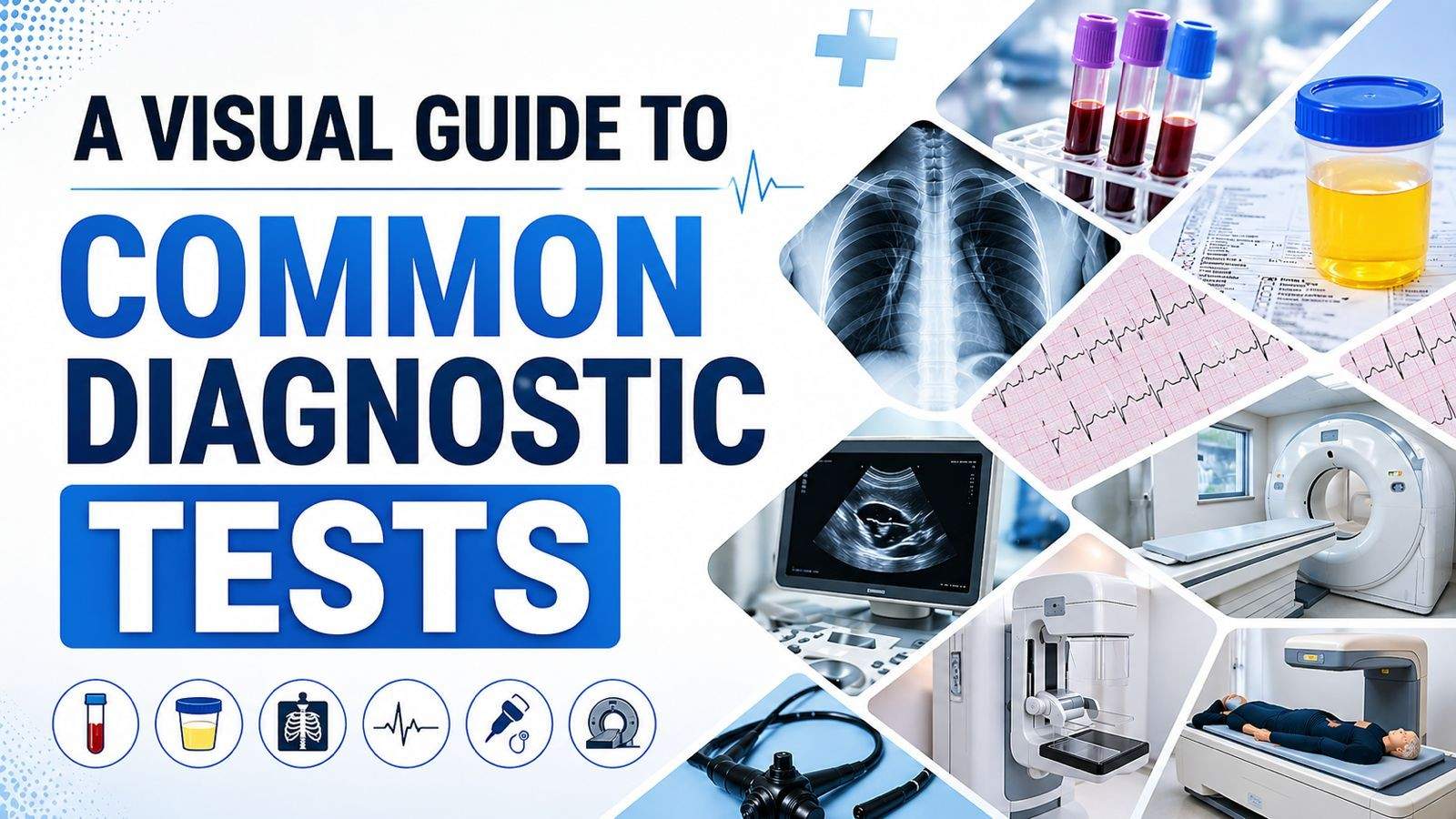
Infographics helps in the visual guide to diagnostic tests and thus helps to simply the complex information in the most precise way and makes it easier to simplify the complex medical procedures and helps to analyse how the different tests helps to contribute in the diagnosis and managing of the health conditions. The visually impactful complex procedures given on one template helps in identify and understanding the entire procedure in one go. In the healthcare procedures lot of data, multiple tests and the technical terminology is involved that is quite difficult for the patients to understand in day to day life and thus these infographics helps to understand such very complicated terminologies. Through the charts, icons and diagrams the gap between the patients’ understanding and critical terminology is bridged which in turn helps to grasp the key and most difficult concepts so quickly.
The process of the diagnosis and the purpose of the tests undertaken is usually explained through the infographics by the doctors to the patients, they help to explain the patients how a particular test will be performed and what the results will indicate this helps to comfort the patients before undergoing the complicated tests and other imaging tests. This improves the communication between the healthcare professionals and the patients which improves the decision making and in informed understanding as well. Thus in the medical education also these infographics are most valuable and they help in the training and learning g the diagnostic procedures easily. Thus infographics simply help in the retention by combining the visuals with the information which is much easier to remember and recall than the plain text.
Interpretation of the Results
Understanding what your numbers mean empowers informed discussions, earlier recognition of concerning patterns, and motivation for health-improving interventions. Knowing how often to get tested helps build clarity and avoids last-minute reactions. In order to understand how our body is functioning over the period of time diagnostic tests aids in that understanding in a great way. Retest in 3-6 months to confirm abnormality and identify trends is essential if the results are slightly abnormal without clear significance. Routine tests and consultations ensure that you are taking precautionary measures before the situation gets worsens. Routine check-ups and tests ensure early detection of health concerns, tracking existing conditions, and assessing overall wellness and in turn help in the early detection of health concerns based on the changing in the age, lifestyle, family history, and medical status. In order to rule out laboratory error or pre-analytical issues retest is essential. It is prerequisite before starting a medication retest is essential.
Also these infographics can be used in the public health campaigns as well in order to make the people more aware about a particular procedure and helps in the prevention of the chronic diseases and early detection helps in the timely treatment and in turn helps to save the lives of many people.