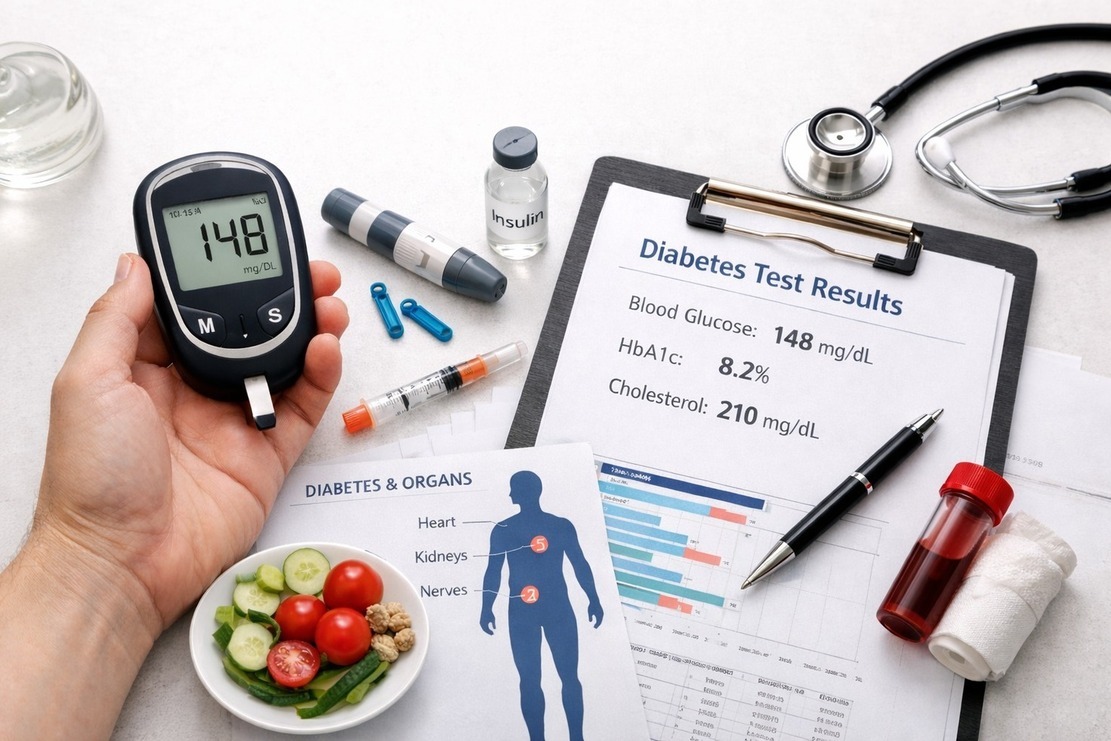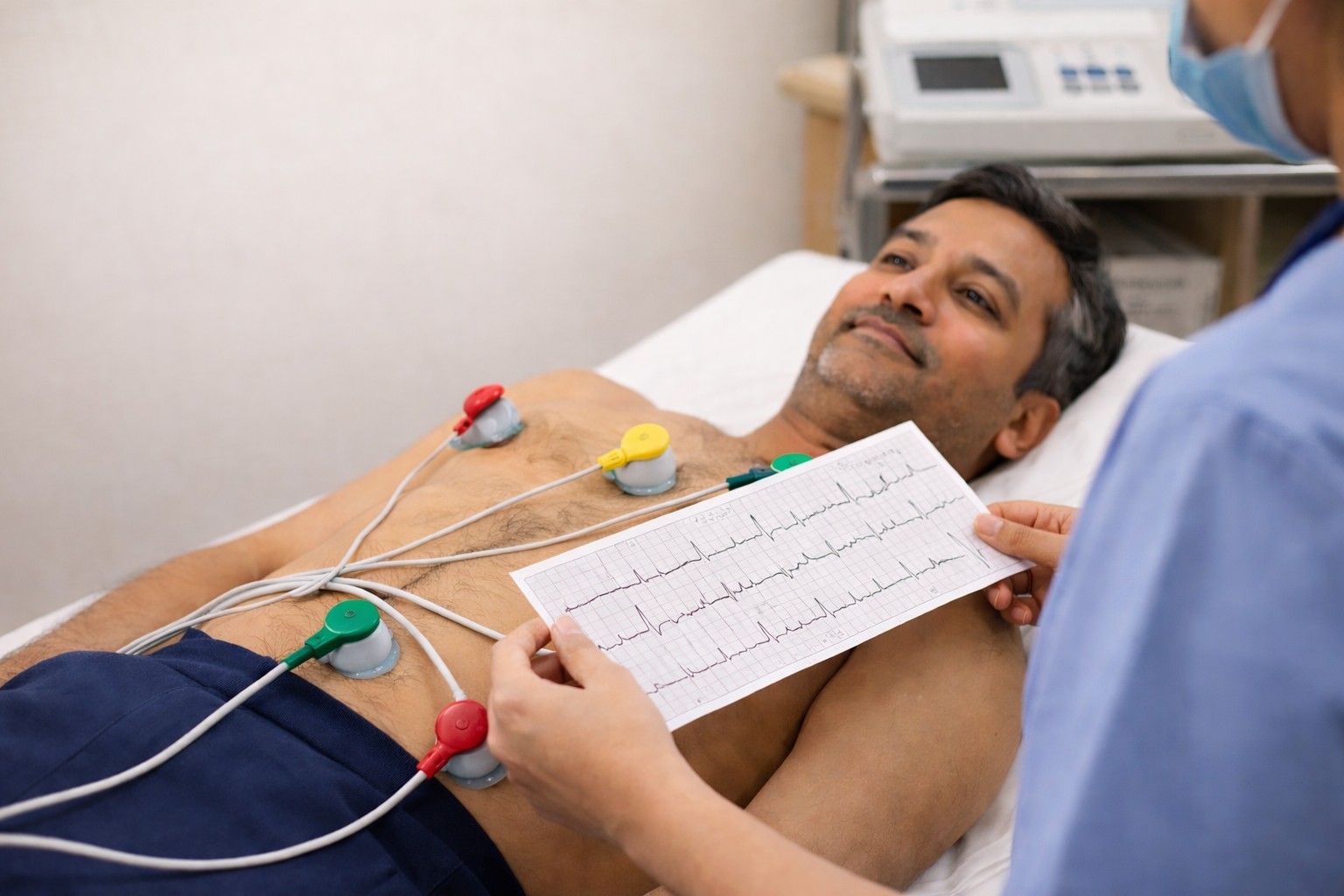
The rate of the heart diseases is increasing globally which is increasingly leading to death and thus it is crucial to understand the top heart health tests that can help detect issues early and provide you with a plan to stay healthy and lead a happy life. When it comes to protecting your health, early detection is the key to preventing serious problems like heart disease, heart attacks, and strokes. A variety of test is involved in the heart screening that can help to understand the risk of the heart diseases and its early diagnosis. The risk of the heart attacks and strokes can be easily detected through a physical examination, imaging and different kind of screenings. One of the most important and common diagnostic tests used to evaluate the heath of your heart is an Electrocardiogram (ECG).It is the non-invasive, simple and painless procedure that is used to record the electrical activity of the heart over a period of time. Thus it is very important to understand what ECG measures and how can it help the individuals to better understand their cardiovascular health. An ECG is the quick test that is used to check the heartbeat of the individual very quickly and it is used to record the electrical signals in the heart through which the activity of the heart is recorded. The results of this test can help to diagnose the irregular heartbeats and heart attacks also known as arrhythmias. Today even some personal devices like the smartwatches can even check the ECGs but usually these machines are found in the hospitals, labs, ambulance and operating rooms.
Electrocardiography is the process of producing an electrocardiogram. In this process the cardiac impulses are recorded on the surface of the body with the help of the specialised electrodes over the specific regions of the body. This is one of the most commonly prescribed tests by the cardiologist in order to obtain more information about the patient’s heart health and it helps to detect any underlying cardiovascular issues or the abnormalities related to the structural changes in the heart.
The ECG tests can help to diagnose
- A previous heart attack
- Cause of the chest pain
- Irregular heartbeats
- Blocked or narrow arteries
- Working of the pacemakers
- Heart disease treatments
An ECG is also done during the following conditions
- Chest pain
- Dizziness
- Pounding
- Skipping of heartbeat
- Fast pulse
- Shortness of breath
- Weakness
- Fatigue
Principle of Electrocardiogram
The two principles of the cardiac conduction and cardiac action potential are used in the ECG and in that the cardiac conduction pathway is relayed down by the action potential generated by the SA node and it generates the cardiac action potential due to which the membrane voltage across the membrane of the cardiomyocytes is changed. This change in cardiac action potential results in the continuous running of the cardiac cycle. The cardiac impulse reaches the skin of the body by transmitting through the heart and then spreading around the surrounding tissues. The electric impulse is used to produce an ECG and the electric impulse is received by the electrodes of the ECG machine and is further processed for the ECG generation.
Types of Electrocardiogram
There are three main types of ECG which are as follows:
- Resting ECG: This type of ECG is performed while lying in the bed and it is the most basic and routinely used ECG type for the diagnostic purposes.
- Exercise ECG: It is performed while doing the physical activities, generally while performing an exercise such as walking on the treadmill and it is also regarded as the stress test and is performed to monitor the electrical activity of the heart during the physical stress and to monitor the condition of the heart.
- Ambulatory ECG: In this type of the ECG the electrical activity is monitored for 24 hours or more and in this type of the ECG a small portable ECG machine called holter is used.
Understanding the ECG Waves
The waves in the ECG cycle represents the heart’s electrical cycle:
- P Wave: Represents atrial contraction of the heart.
- QRS Complex: Indicates ventricular contraction.
- T Wave: Represents repolarization of the ventricles.
- PR Interval & ST Segment: Provide information about conduction timing.
What Does an ECG Measure?
The electrical conductivity of the heart is measured by the ECG and it also helps to measure the following in our body:
- Heart Rate
- Heart Rhythm
- Electrical Conduction
- Structure and Size of the Heart
- Blood Supply to the Heart (Ischemia)
- Electrolyte Imbalance
Importance of the ECG
An ECG analysis helps to monitor the following:
- Heart Problems early detection.
- Heart Attack diagnosis.
- Medications assessment.
- Evaluation of the Symptoms.
- Pre-Surgical Assessment.
Monitoring the condition of the heart
- Preventing Heart Attacks: In order to prevent the heart attacks doctors can determine the blocked arteries or heart valve problems through these screening tests and the change in the lifestyle can be made in this regard.
- Early Detection Saves Lives: Early signs of heart diseases can be determined though these regular screenings allowing one to take preventive measures before the situation gets worsens.
- Managing Risk Factors: To identify risk factors such as hypertension, diabetes, and high cholesterol these routine heart health tests help to monitor these factors and take the necessary precautions in order to cure the same.
Intervals in a Normal Electrocardiogram
The time period between the beginnings of two waves is measured and analysed. These time periods are called intervals and these are time periods required to transmit the impulse in the conduction pathway and there are two main types of intervals such as:
- PR Interval: The gap between the P- wave beginning and the beginning of the QRS complex is known as PR interval.
- QT Interval: The gap between the start of the QRS complex to the end of the T wave is known as QT interval.
Interpretation of ECG
Based on a collective result of all the components, an ECG report is interpreted. Following results are shown by the normal ECG:
- Heart Rate: 60 to 100 beat per minute normal heart rate.
- Heart Rhythm: Consistent and even heartbeat.
- PR Interval: 0.12 to 0.20 seconds
- QRS Duration: 0.06 to 0.10 seconds
- QT Interval: 0.40 seconds
- ST Segment: 0.08 seconds
- P-wave: Upright and uniform
- T-wave: Upright
Application of ECG
- Diagnosis of the cardiovascular diseases.
- Easy assessment of the heart diseases.
- Early detection of the heart attacks.
- To check how the heart works under stressful conditions.
- Studying the heart’s electrical activity.
- Assessing heart diseases and heart attacks.
Limitations of ECG
Some of the limitations of ECG are:
- Not able to detect problems instantly.
- At times may rule out the heart diseases.
- Normal ECG is not enough other techniques are always needed such as echocardiogram or angiography.
- No information about the anatomy of heart.
- High chance to show false results due to problems with electrodes at times.
- Interpretation of the results is not easy.
- Analysis is done only over a period of time.
- Unable to predict future cardiac events.
Recent Advancements in ECG Technology
ECG technology has undergone the following advancements:
- Monitoring at home with the portable ECG devices.
- Smartwatches can detect irregular heart rhythms.
- Faster and more accurate diagnosis through AI based Models.
These advancements are making heart monitoring more accessible and efficient.