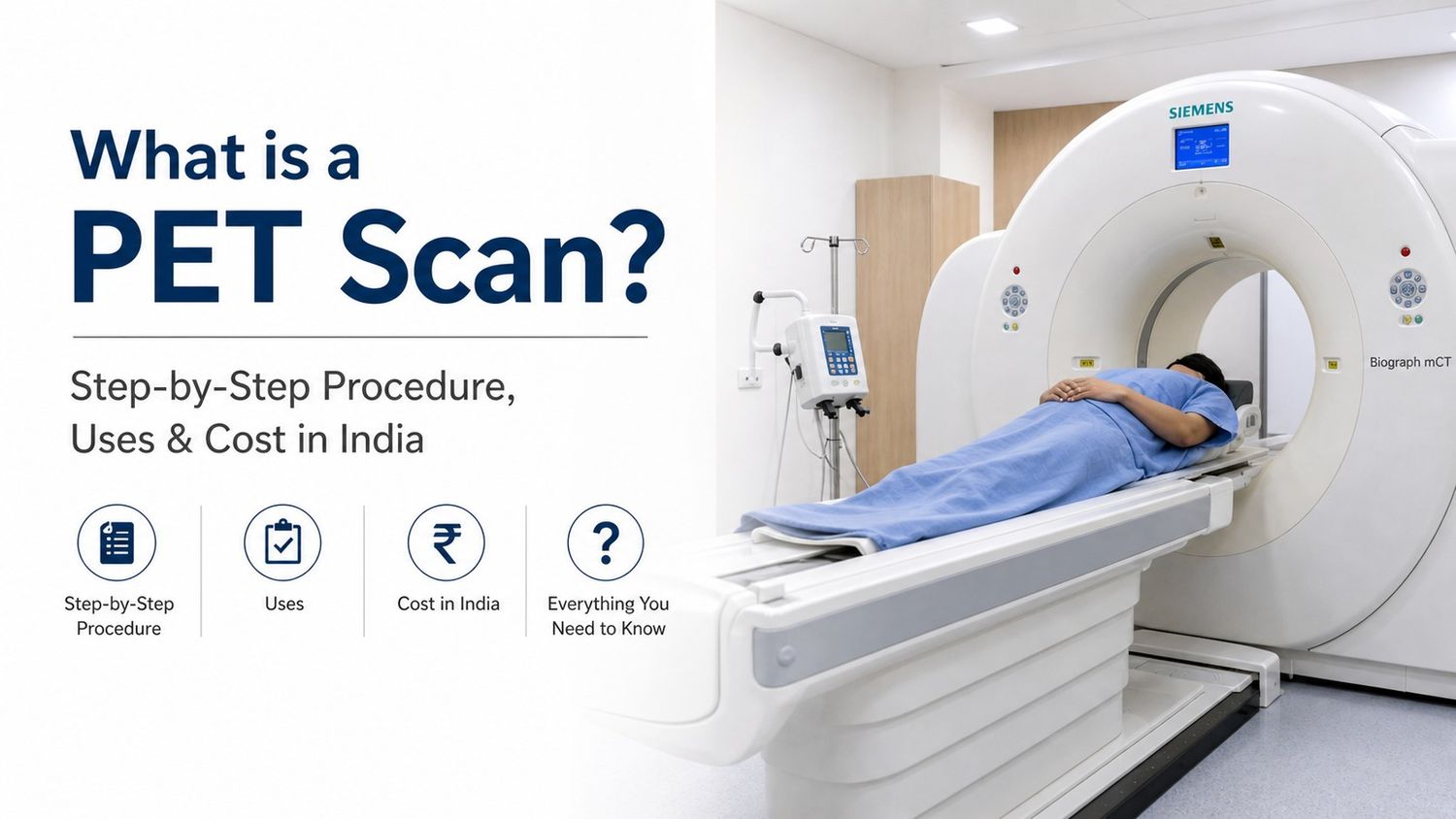
The technology used for the detection of abnormalities like cancers in any part of the body is known as Positron emission tomography (PET). In this test the radioactive tracers are used to detect the cancers at the cellular level. Variety of the conditions at an early stage can be detected through this test; the scan is reliable, quick and is cost effective which in turn depends on the location of the city as well. The test is safe with the minimal risks and it might lead to the slight discomfort during the injection process for the test. The diseased cells are detected by the small amount of injectable radioactive materials called radiotracers.
A small, safe amount of radioactive material (a radiotracer) is given via IV during a PET Scan, which is a type of nuclear medicine imaging. It focuses on processes and molecular activity within your body, enabling early-stage disease detection. Different amounts of the radiotracer are absorbed by diseased cells than by healthy cells, and these areas are called hot spots. This radiation is detected by the PET Scanner, and it produces images of the affected tissue. The entire PET scan process takes about two hours. For the injected radiotracer to be absorbed, it can take up to 60 minutes; it is suggested that you sit quietly and limit your movements during this time. The actual PET scan takes about 30 minutes. The PET scan detects changes in the body's metabolism and biochemistry. These patterns can help diagnose various diseases. Tracers may be labelled forms of sugar, amino acids, ammonia, water, or other substances, and these tracers help detect the level of activity in the body, whether it is normal or abnormal, based on the tracer's uptake by the body's cells. Metabolic functions such as blood flow, oxygen intake, how your body uses glucose (blood sugar), and the speed at which cells replicate can be evaluated with a PET scan.
For the various types of cancers the PET scan is used and is considered more accurate and effective in diagnosing the cancer. It has the following advantages:
- Diagnosis of the cancer.
- Helps in decision making.
- Helps to determine the size of the cancer.
- Monitoring of the cancer.
- Assessing the effectiveness of the treatment of the cancer.
- Determine the stage of the cancer.
An area that appears to still contain cancer cells may be revealed during this scan treatment.
Procedure of the PET scan
- Prescription from the doctor
- Preparing for the scan.
- Presence at the diagnostic centre.
- Radioactive tracer’s injection.
- Scanning process.
- Preparation of the reports.
- Reports analysis.
- Diagnosis process initiation.
PET scan is recommended for
- For the patients undergoing cancer treatment.
- People having the unexplained heart-related symptoms.
- People having memory issues.
- Individual who require the follow up scans immediately after scans.
- Individual who require more than anatomical imaging.
- For monitoring recurrence or metastasis.
Side Effects of a PET scan
Following are the side effects of the PET scan:
- The exposure from radiations.
- Not recommended for the pregnant women.
- For accurate results fasting is required.
Always follow the doctor’s advice and discuss the risk of all these factors with your doctor in order to minimize any potential side effects.
Benefits of PET scan
The benefits of PET scan are:
- Accuracy of the process of diagnosis increases.
- Proactive health management.
- Non-invasive technique.
- Painless process.
- Thorough assessment without surgery.
- Provides precise and detailed images.
- Stages are determined accurately.
PET scan cost in India
Depending on the city and the diagnostic centre location the cost of the PET scan in India varies and it usually ranges from ₹7,000 to ₹40,000 and it is a very valuable tool, which helps in detecting the functionality of the organ and helps in the planning and disease management.
The cost depends on following factors as well:
- The type of scan.
- The hospital or diagnostic center.
- Need for additional tests or not.
What does a PET-CT scan show?
PET-CT scan is used to show various abnormalities in the body by using radioactive tracer and limited radiation like:
- Cellular changes in the body
- Metabolic activity at the minor scale
- Reveals the functioning of organs
- Provides anatomical images of bones, tissues, and organs
- Detects abnormalities in the body, etc.
Within 48 hours, the report of your scan is sent to your healthcare provider with full details of the normal and abnormal findings of the report. The hot spots are also highlighted in the images, and an oncologist and pathologist will analyse your report and will interpret the results based on that. The areas of low metabolic activity with less radiotracer uptake is known as cold spots and are given in the results of the reduced blood flow or possible tissue death case as well.
This scan helps the doctors to understand disease activity at the cellular level, and it is one of the most powerful diagnostic tests. It is especially used for the diagnosis of cancer, and it is active to detect the spread, disease and treatment response. The test is safe, painless and completed in a few hours. But it should always be taken in a reputed hospital under a trained professional.