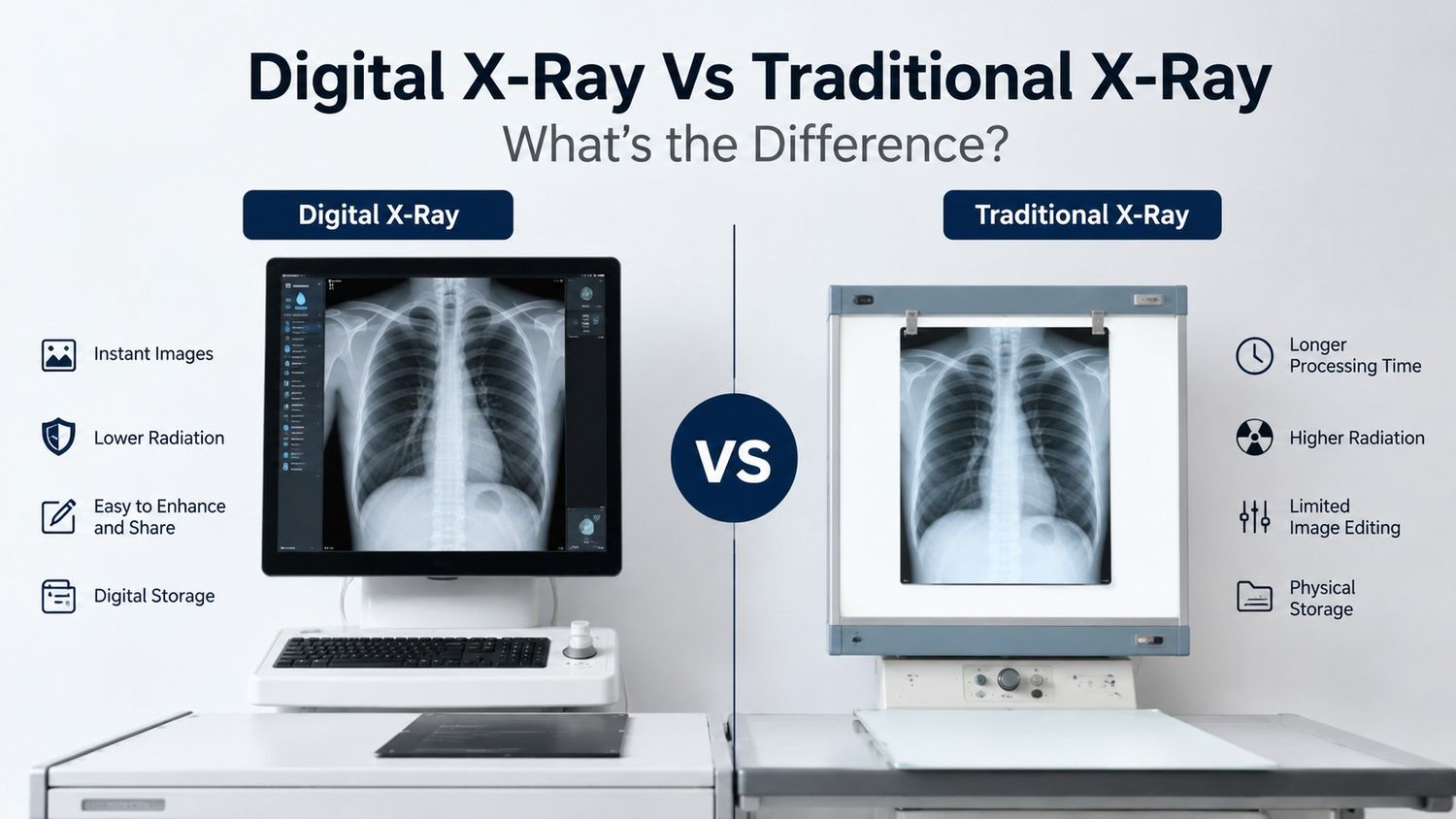
X-rays have been used right from 1900s to diagnose the health problems. It is one of the oldest medical imaging technique used. With the advancements in the technology the modern X-rays have been changed dramatically. In the traditional X-rays technology, a film was used to examine the different parts of the body and they are the type of the electromagnetic radiations and they can easily penetrate through the body of the patient since they emit the higher energy. An X-ray source and a detector is used to generate the images of the body tissues and structures inside the body. In a digital X-rays the same type of procedure is followed but the main difference is that computer and not a film and thus the digital X-rays captures the more accurate and clearer images as compared to the traditional X-rays.
Thus it has been established that over the years X-rays have evolved significantly and they have become popular due to their speed, image quality and Efficiency in the medical procedures. The more informed decisions by the patients can be made if they know the differences between the digital and traditional X-rays. The main difference between the two lies in their technology, exposure to the radiations, storage, processing of the images and the overall convenience as well.
In the traditional X-rays technology, the main thing is after the development of the image on the film it must undergo a chemical development process in a darkroom before the images can be viewed and the procedure used is similar to that of the photograph development and usually takes several minutes and this method is the oldest and most widely used method before the digital X-ray method whereas in the digital X-rays the imaging technology uses sensors instead of the photographic films. The time for the conversion of the images into the digital data is instant and is displayed on a computer screen within seconds due to this change in the speed this technique has out right the traditional X-ray method. The main advantage of the digital X-rays is the image quality can be enhanced, enlarged, adjusted for brightness and contrast, and shared electronically with healthcare professionals and their storage is convenient and very easy.
Difference between Traditional and Digital X-rays:
- Photographic films are used in traditional X-rays whereas in Digital X-rays digital sensors are used.
- Chemical processing is required in traditional X-rays while in Digital X-rays images appear instantly on a computer.
- Traditional X-rays are less efficient and have less speed in comparison of the digital X-rays which are more efficient and have more speed.
- Images are stored as physical films in Traditional X-rays while in the digital X-rays images are stored electronically.
- In traditional X-rays the radiation exposure is more while in digital X-rays the exposure to radiations is very less.
- There is risk of damage in Traditional X-rays while in digital X-rays there is no risk of damage.
- Chemicals are used in traditional X-rays while in Digital X-rays no chemicals are used.
- Traditional X-rays are more costly than digital X-rays.
Advantages of Traditional X-Rays
Advantages of the traditional X-rays are:
- Lower cost of the equipment.
- The technology used is simple.
- Effective with the facilities with limited digital infrastructure.
- Reliable image production when properly maintained.
Advantages of Digital X-Rays
Advantages of Digital X-rays are:
- Faster image acquisition.
- Faster process of diagnosis.
- Lower radiation exposure.
- Superior image quality.
- Easy image enhancement.
- Efficient electronic storage.
- Faster sharing
- Reduced environmental impact.
- Improved workflow in medical facilities.
Conclusion
X-ray as a medical imaging technology has only one goal to help the doctors diagnose injuries and medical conditions and the main difference between the two types of the technologies lies in the technology used to process and capture the images. The traditional X-rays used photographic films whereas the Digital X-rays uses digital sensors for the processing of the images. Digital X-rays offer numerous advantages, including enhanced image quality, reduced radiation exposure, faster results, and convenient electronic storage. These benefits have made them the preferred imaging method in most modern healthcare facilities. Nevertheless, traditional X-rays continue to serve as a dependable diagnostic option in many settings. Thus it is expected that in future as well digital X-ray systems are expected to play an even greater role in improving diagnostic accuracy, patient safety, and healthcare efficiency.