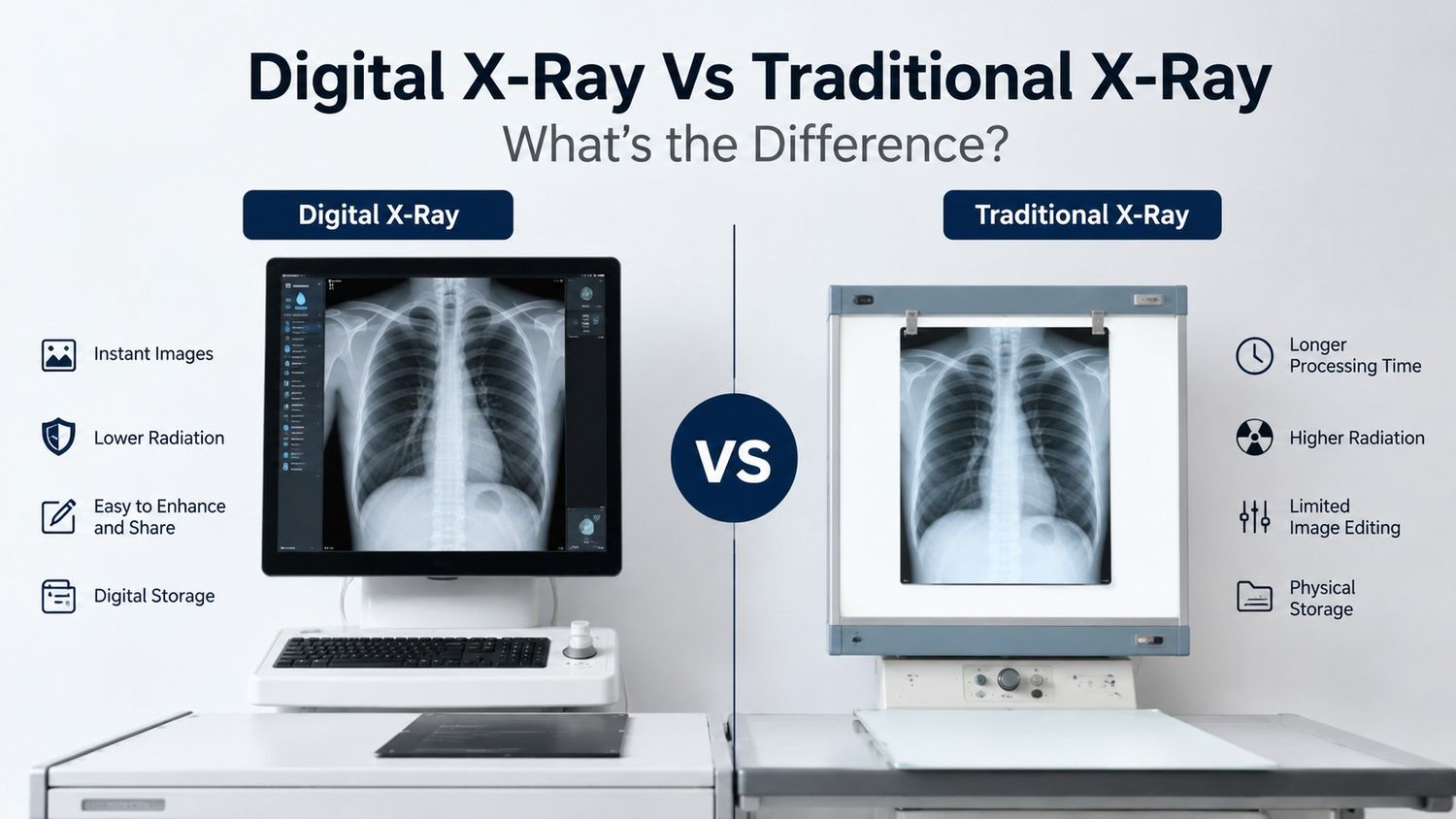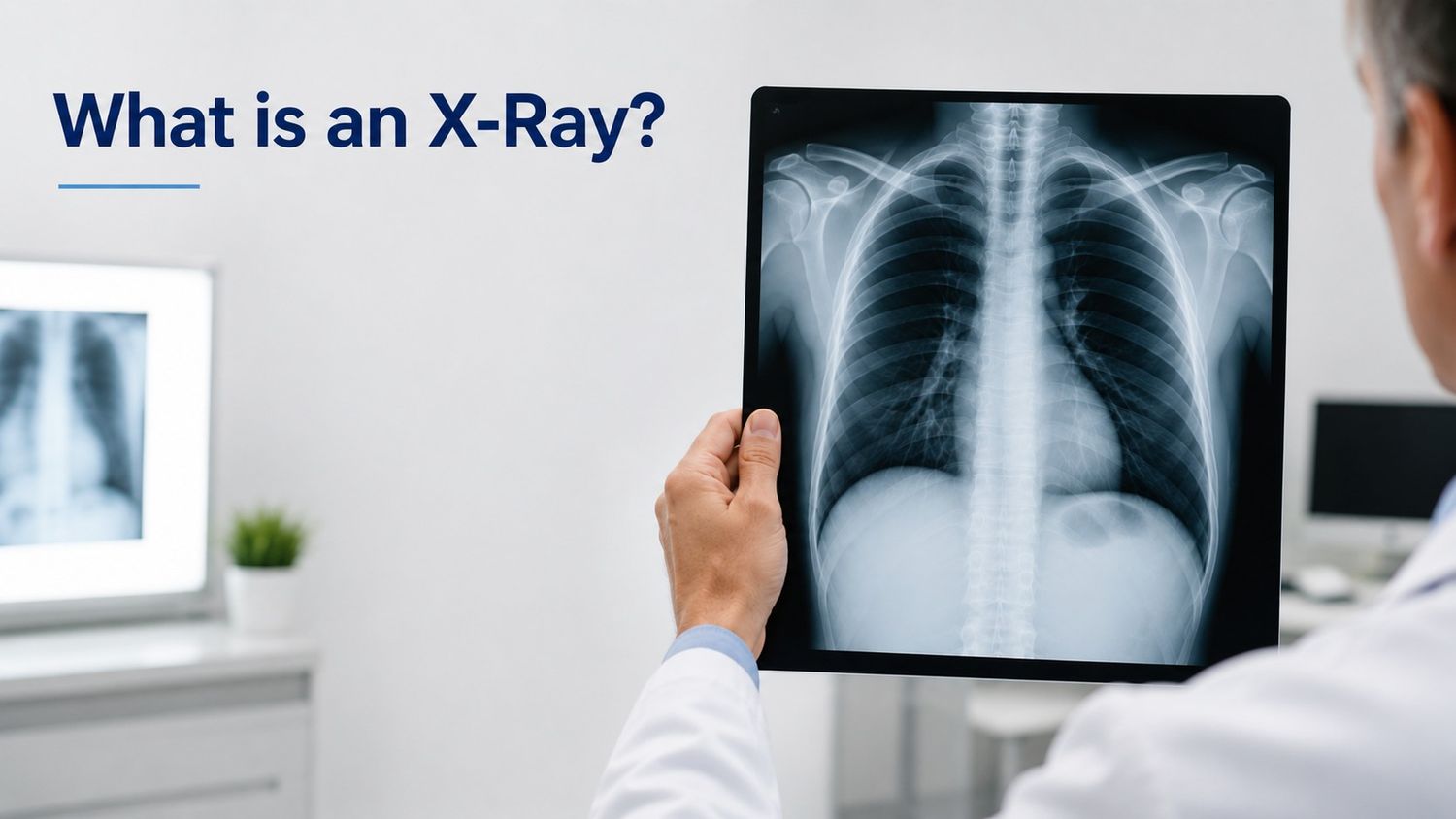
The electromagnetic radiation with very short wavelengths and high energy is known as X-rays. Wilhelm Conrad Roentgen was the German physics professor who first discovered the X-rays. In order to create the pictures of bones, teeth, chest, joints and some organs a small amount of ionisation radiations are used in the imaging technique. X-rays form the electromagnetic radiations since the different body tissues absorb electromagnetic radiations differently. Since the bones absorb more radiations they appear white on the X- ray images and the shades of grey appear on the X-ray image for the softer tissues. As per the density of the objects the X-rays penetrate deep inside the body and the extent of the depth is more or less as per the density. In order to obtain an X-ray image of a part of the body being X-rayed is placed between the source of the X-ray and an X-ray detector through the positioning of the patient. Depending on the type of the tissues through which the X-rays are passed the images appear on the monitor in the form of the shades of the black and white. For example: Our bones appear white on X-rays because they make the bones denser. When the X-ray for the broken bone known as fracture is examined the dark areas in the fractured bone within the lighter bone on the X-ray film will appear.
Types of X-rays
The types of X-rays used for the diagnosis of different diseases are as follows:
- Mammography: It is used to detect breast cancer.
- Computed tomography (CT) scans: It is used for the body cross-sections detailed imaging.
- Fluoroscopy: It is used to study the dynamic movements inside the body such as heart beat movement.
- Other uses: It is also used in the cancer treatment in order to determine the condition of the body.
Procedure of an X-ray
- Between the X-ray machine and the detector, the patient is positioned and the X-ray for the part under examination is being scanned.
- The body p-art under examination must remain still during the scan because movement can blur the image.
- Images from different angels are taken by the radiographer.
- During some X-rays to get a clear image, the patient may also be asked to hold their breath for a few seconds during the scan.
- The actual exposure time is very less as compared to the time spend in positioning the patient and checking the quality of the images obtained.
- The images are analysed by the radiologist and the reports are prepared and sent to the patient.
- The treatment starts after examination by the doctor.
Uses of X-Rays
The most common form of X-ray used is X-ray radiography for the diagnosis are:
- Bone fractures
- For Infections
- Calcifications
- For detection of tumours
- Arthritis in joints
- Osteoporosis
- Dental issues
- Heart problems
- Blood vessel blockages
- Digestive problems
Benefits of X-rays
- It helps the doctors to get the quick view of what is happening inside the body.
- It is painless, fast technique.
- It is widely available technique.
- Helps to make quick decisions such as in case of suspected fractures etc.
- It also reduces the need for exploratory surgery in many cases.
- It helps healthcare providers view bones, organs, blood vessels and tissues
- It is very quick technique and takes less time.
- X-rays are also less expensive than many advanced imaging tests such as CT scan.
Side effects of an X-ray
- Slight discomfort can be there if the patient holds an injured body part in a particular position.
- If ALARA principle is not followed it can become dangerous.
- Side effects such as nausea, itching, rash or allergic reactions are common if contrast dye is used.
- Stomach cramps and constipation.
- Vomiting
- Skin rash or hives
- Wheezing
- High or low blood pressure
- Shortness of breath or difficulty in breathing
Conclusion
Thus we can conclude that x-rays are used widely in the modern medicine as the common diagnostic tool. They are used to detect the fractures, chest problems, dental issues, joint conditions and many other internal problems quickly and safely. X-rays are safe, painless and quick technique and thus are used exclusively in the medical field. Although X-rays involve a small amount of radiation, doctors recommend them only when the expected benefit is greater than the risk. Patients should follow preparation instructions and always inform the medical team about pregnancy, allergies or previous reactions to contrast dye.