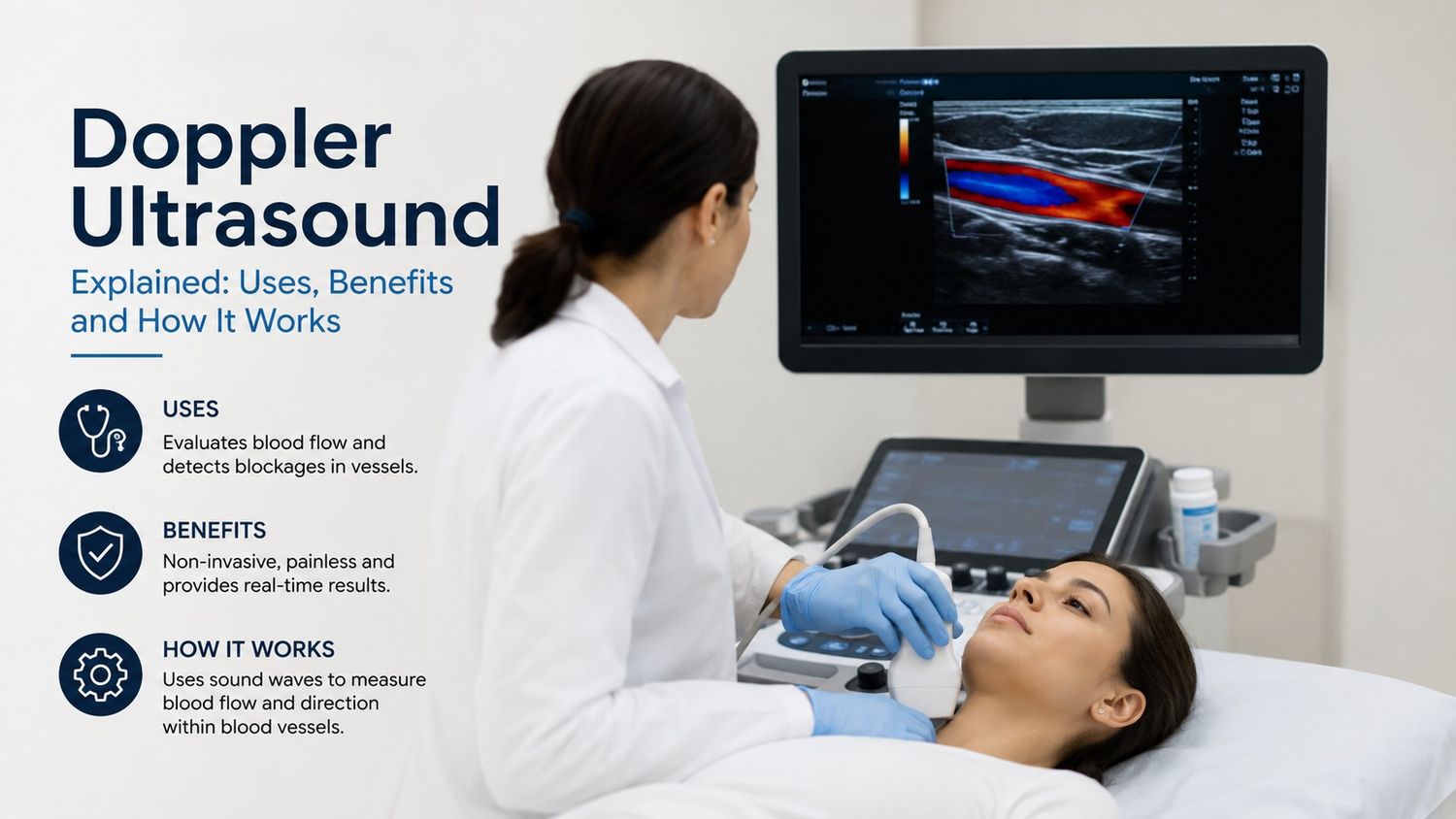
The non –invasive imaging technique that uses sound waves to evaluate blood flow through the body's blood vessels. In this technique the red blood cells present in the body bounces back the sound waves in this type of the ultrasound and is known as Doppler Ultrasound. The change in the sound waves pitch can be easily seen on the computer screen by the healthcare provider. Thus this type of ultrasound helps to determine the blood flow direction and movement in the body and it also measures the blood movement within the arteries and veins. Diagnosis of various vascular and cardiac conditions can be determined easily through this ultrasound as it helps to determine the abnormalities in blood circulation.
It is widely used in the hospital and diagnostic centers to assess the blood flow in the arteries, determine the blockages and monitor the pregnancy and helps to evaluate the heart health. It is the painless, safe and non-invasive technique since it does not use the radiations and thus it is safe for age groups including children and pregnant women as well.
Preparation for the Doppler Ultrasound
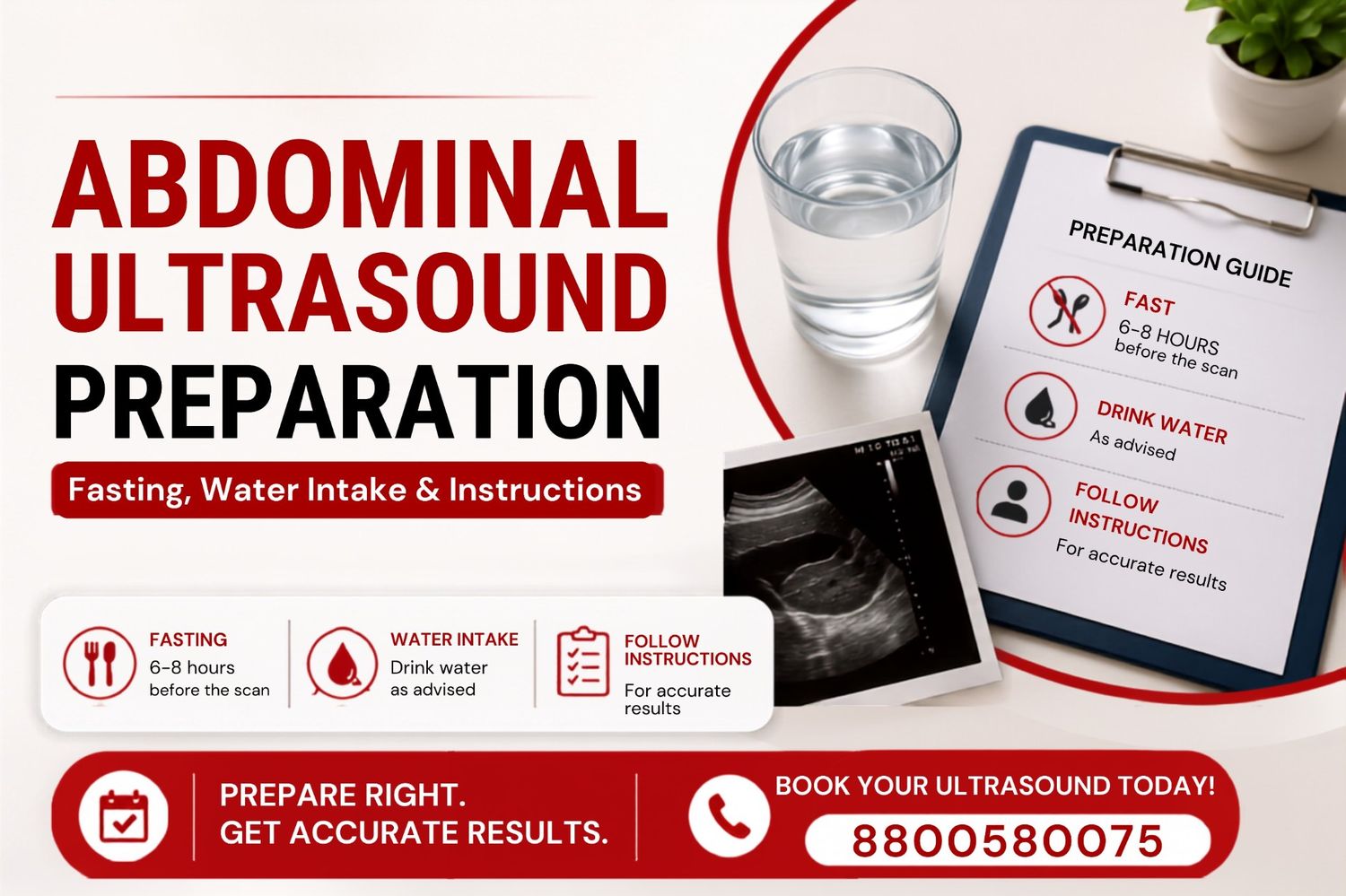
- Fasting is usually recommended before the ultrasound irrespective of the type of the ultrasound and reason for which it is carried out.
- Smoking should be avoided or stopped permanently.
- Consumption of the nicotine-containing products for a minimum of two hours before the test should be stopped.
Procedure for the Doppler Ultrasound
- Imaging technology is used by the sonographer or the specialist to carry out the ultrasound.
- Depending on the type of the ultrasound the position of the body is decided for the test.
- A gel is applied on the skin where the ultrasound is to be carried out.
- The sonographer glides a tiny probe on your skin in order to carry out the ultrasound.
- The probe helps the sound waves to travel during the ultrasound.
- The high-frequency sound waves are sent by the machine in the body.
- The waves bounce off the blood cells, and the pitch changes.
- The change in the waves is examined by the probe and then the graphs or pictures are converted by the machine.
- The gel is then wiped out of the body.
- A computer processes these signals and displays images and blood flow information on a monitor.
Types of Doppler Ultrasound
- Spectral Doppler Ultrasound: It displays the flow of blood in the body in the form of the graphs and thus allows the doctors to measure the velocity of the blood flow.
- Colour Doppler Ultrasound: The direction and the speed of the blood flow is determined using the colour coding.
- Power Doppler: It is more sensitive than the colour Doppler and it can detect the slower blood flow as well.
- Duplex Doppler Ultrasound: It makes the use of the traditional ultrasound technology with the Doppler technology.
- Continuous Wave Doppler: It is quite useful for measuring high-speed blood flow and it continuously sends and receives the sound waves.
Uses of Doppler Ultrasound
Doppler ultrasound uses are as follows:
- It helps to determine the blood clots.
- Narrowed or blocked arteries can be detected easily.
- The condition of the heart can be determined.
- Doppler ultrasound evaluates blood flow between the mother, placenta, and fetus during the pregnancy.
- Helps to identify the damaged veins.
- Helps to evaluate blood flow to organs
Benefits of Doppler Ultrasound
Doppler ultrasound offers numerous advantages which are as follows:
- It is the non-invasive procedure.
- Radiation free imaging technique.
- Quick and Convenient to use.
- Real time results are obtained.
- Cost effective in comparison of other techniques.
- Provides valuable diagnostic information.
- The technique is safe during pregnancy.
- It is widely used for fetal monitoring and maternal health assessments.
Conclusion
Thus we can conclude that Doppler ultrasound is a valuable diagnostic imaging technique that helps healthcare providers assess blood flow throughout the body. It can detect clots, arterial blockages, heart conditions, circulatory disorders, and pregnancy-related complications by using the sound waves. It is one of the most widely used diagnostic tools in modern medicine due to its non-invasive nature, affordability and the real time imaging results provided by the ultrasound. Doppler ultrasound provides critical information that helps doctors make accurate diagnoses and develop effective treatment plans.