Doppler Ultrasound is widely used to evaluate blood flow in various parts of the body and it is one of the most essential diagnostic tool in the field of Medical science. This non-invasive procedure provides invaluable insights into your overall health by diagnosing the vascular conditions and other routine monitoring of the body. Doppler scans are considered more dynamic than the routine ultrasonography in which the pictures are collected over the computer screen whereas in the Doppler scans the measurement of the blood movement in vessels takes place in order to provide information such as the speed and direction of blood flow.
- Doppler scans help identify conditions like deep vein thrombosis (DVT) or peripheral artery disease (PAD) in a vascular type of medicine.
- They assess blood flow through the heart and its valves in the cardiology.
- Doppler ultrasound is used to monitor blood flow to and from the placenta, monitoring the health of a fetus.
The procedure of the Doppler ultrasound takes about 15-45 minutes based on the area under examination and is comparatively safe even for the pregnant women since it does not use radiations. Doppler provides dynamic data, making it crucial for diagnosing and monitoring conditions affecting the cardiovascular system.
Who might need a Doppler ultrasound?
Patients with following conditions might need the Doppler ultrasound which are as follows:
- If the patient is Diagnosed with blood vessel-related disorder.
- If he has undergone with surgery, and want to check the blood flow
- In pregnancy a colour Doppler Ultrasound is required.
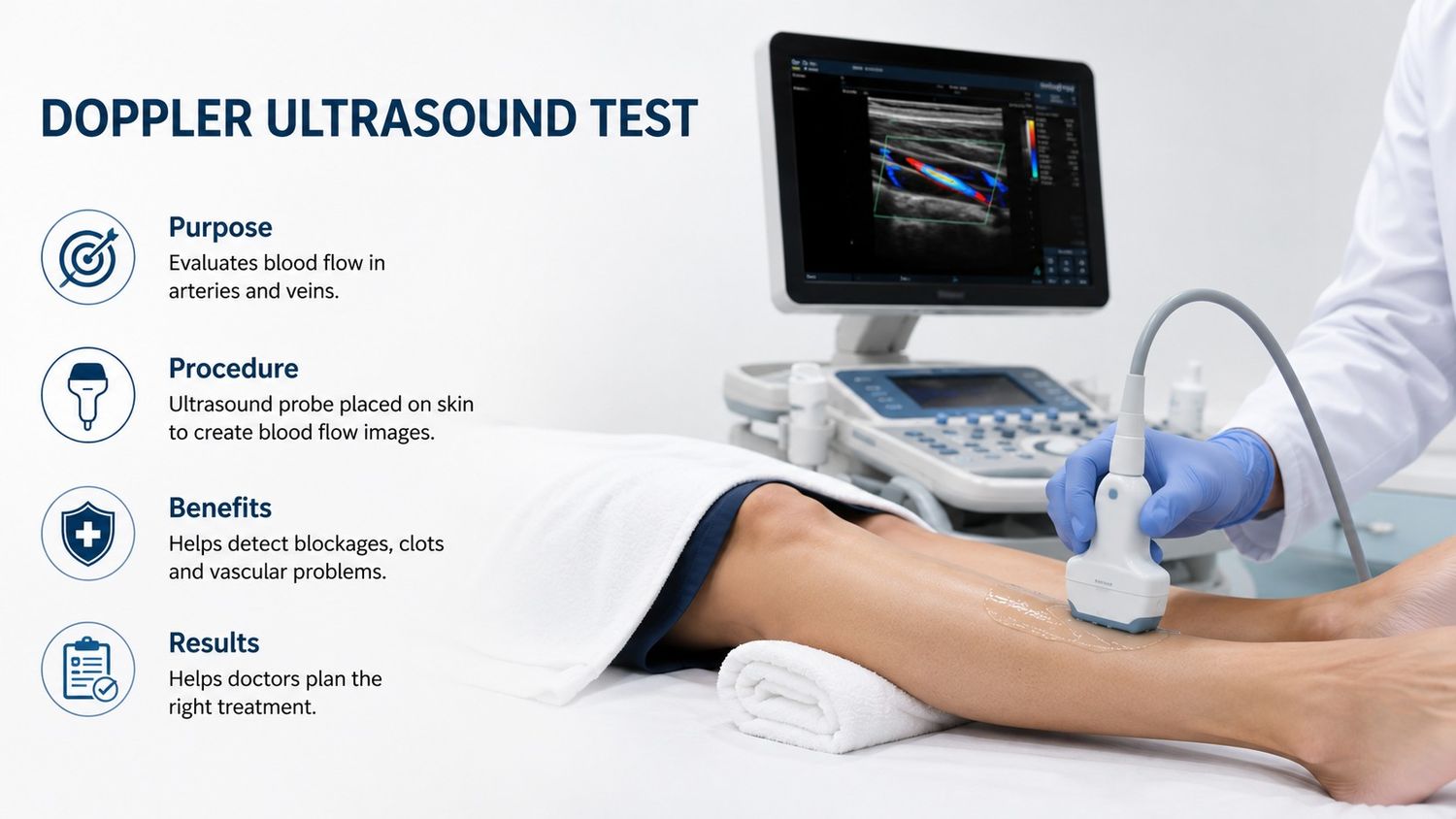
Purpose of the Doppler Ultrasound
Following are the main areas where Doppler ultrasound is widely used and has extensive applications as well, such as:
- It helps to evaluate the circulation of the blood inside the body.
- To detect any sort of the blockages such as narrowed or blocked blood vessels in the body.
- Helps to access the vascular heath like the Deep Vein Thrombosis (DVT).
- It can assess and check the foetus health as well during the pregnancy.
- Helps to plan and monitor treatments such as vascular surgeries
Under the following conditions as well the Doppler Ultrasound can be recommended as such:
- Leg pain or swelling
- Suspected blood clots
- Varicose veins
- Dizziness
- Stroke symptoms
- Poor circulation in the arms or legs
- Unexplained vascular abnormalities
Procedure of the Doppler Ultrasound
- Doppler ultrasound uses the Doppler effect.
- In this procedure the pitch is changed by the sound waves when they are send into your body.
- The sound waves bounce off from the body’s moving red blood cells usually in the blood vessels it goes back to the probe to be detected.
- The direction of blood flow and how fast the blood is moving is also determined by the ultrasound.
- The sound waves travel during the ultrasound through the probe.
- The machine sends the high-frequency sound waves in the body.
- The change in the waves is examined by the probe.
- The gel is then wiped out of the body.
Benefits of Doppler Ultrasound
The benefits of the ultrasound are as follows:
- Radiation free technique and is painless.
- It is the safe technique.
- The precise and clear images are obtained in this process.
- Patient safety is considered as the priority.
- Transparent rates for the ultrasound.
- The detailed explanations during the results analysis are provided.
- Quick and Convenient to use.
- The results obtained are real time.
- Cost effective technique.
- Helps to access various health conditions.
- Safer during pregnancy as well.
Understanding the Results
The results of the Ultrasound are easy to evaluate through the findings of the doctors and the Abnormal findings during the ultrasound may reveal:
- Blood clots
- Narrowed arteries
- Blocked blood vessels
- Poor circulation
- Heart valve abnormalities
- Reduced blood flow to organs
- Pregnancy-related circulation issues
Based on the findings of the results the treatment and further assessment of the diagnosis process can be carried out under the guidelines of the concerned and trained doctors or sonographer.
Conclusion
Doppler Ultrasound is the most invaluable tool in the field of the medical science and it is the most safer, painless and non-invasive technique in nature. It helps to access the flow of blood inside your body and helps to determine lot of abnormalities such as circulatory and vascular conditions inside the body and most importantly it is considered safe during pregnancy as well where the foetal health can also be determined easily. The procedure is straightforward and offers a wealth of benefits for your health.