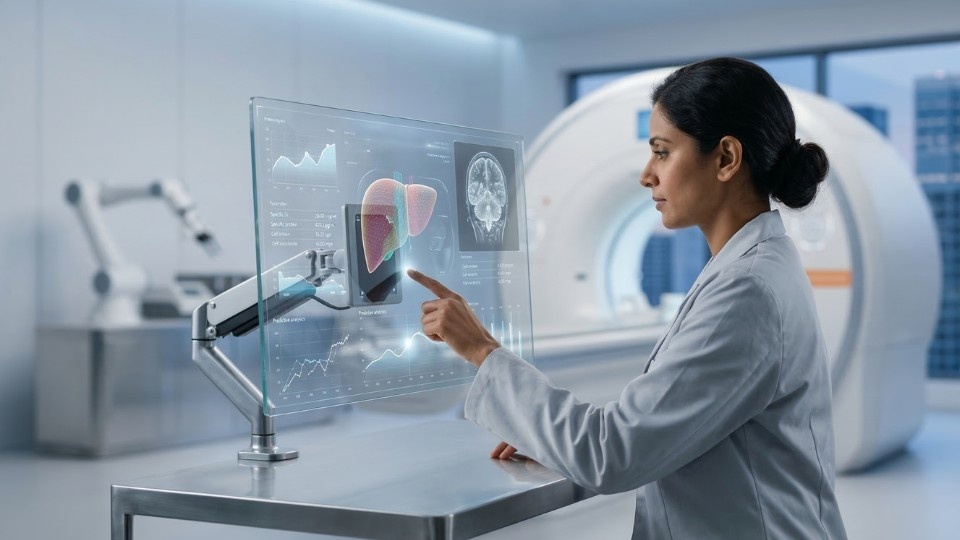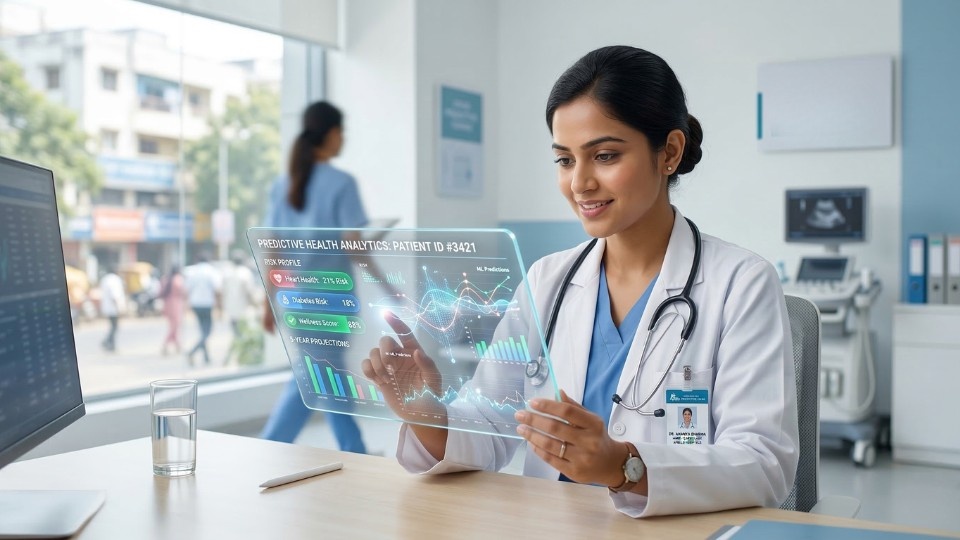
The health care systems around the world are shifting from reactive diagnosis to predictive decision-making. A new approach that is to foresee an individual’s susceptibility to future medical conditions in healthcare is known as Predictive diagnostics. These markers are generated by a panomic approach to biology of diseases such as genome wide association study and metabolomics. The goal is to shift healthcare from a reactive model to a proactive one, focusing on early intervention and prevention. The large output of an organisms DNA and RNA, proteins and different metabolites etc are the important information’s determined by these sophisticated methodological approaches. The data available for the predictive analysis of CDD is increased due to the advancement in the computational analysis. To verify potential benefits of predictive medicine in the clinical practice operative proposals for the health care systems are needed. The classical approaches of modern medicine to CDD have been changed dramatically by the predictive diagnostics, personalized medicine and personalized therapy. To preserve individual health in people with high risk by starting early treatment or prevention protocols this approach offers substantial advantages. However, recent development in modern medicine especially in genetics, proteomics, and informatics is leading to the discovery of biomarkers associated with different CDD that can be used as indicator of disease’s risk in healthy subjects.
The primary, secondary or tertiary prevention are the part of this future treatment of CDD. The reduction in the number of diseases in a population by lowering the exposure to various agents and promotes the resistance in the host and all this comes under the primary prevention of the diseases. Through the early case detection, treatment and diagnosis the rate of the disease and its recurrence is limited and is accounted under the secondary prevention of diseases. Tertiary prevention determines the damages in the tissues associated with a given CDD and all the symptoms associated with it by making an acceptable quality of life. Individuals differ from each other by only 0.1% difference in the nucleotide sequence of human genome and difference arises in the form of a single base pair or the Single Nucleotide Polymorphism (SNP). Change in the cognate protein concentration or function is usually caused by the individual SNP and is limited for determining the disease risk evaluation. In fact, human CDD are often the consequence of a complex interplay of genetic, epigenetic and environmental factors. The cost of these multidisciplinary medical approaches which includes the clinical diagnosis and therapy is increasing progressively. To determine susceptibility to disease development in polygenic human condition such as CDD, the presence of the SNPs is more informative.
The clinical presentation of the disease depends upon interactions of several different genes with environmental factors. The novel markers of the CDD are provided by the findings of the functional genomic investigations. Information regarding genes associated with the disease risk is collected by the genetic investigations on CDD but still the delays in the diagnosis persist because of the manual reviews as the volumes of the data is more than the team size to evaluate the data leading to widening of this gap between the expectation and operational reality. But the AI predictive diagnostics is closing this gap by analysing the data and interpreting the results of the analysis.
Traditional methods are not based on identifying existing diseases while the Predictive diagnostics is based on the identification of the existing diseases. Traditional methods are based on providing the recap of the health while in the predictive diagnosis the future analysis is undertaken where the individual’s biological blueprint is analysed along with the other major factors which estimate the likelihood of developing specific illnesses over time are also estimated. By adopting this approach the potential health risk is identified in advance which in turn helps the health care providers and individuals to implement preventive measures, such as lifestyle adjustments, early interventions and regular monitoring, in order to eliminate the evil from its roots.
The scientific methods that analyse various biological data points build the foundation of the predictive diagnostics. The study of an individual’s DNA known as Genomics plays a significant role by identifying genetic predispositions to certain diseases. The variations in the specific genes indicate the increased risk for conditions like Alzheimer’s disease or cancers of certain types. The proteins also serves as the biomarkers for diseases and their study is known as Proteomics. Biomarkers are the indicators of the normal biological processes, pathogenic processes to therapeutic interventions; these are used to interpret the biological tests results, these markers ranges from basic screening panels to advanced specialty tests. The biomarkers used to interpret the results are universal in nature and does not depends on the source or the institution through which the test is being conducted and thus are universally accepted. The development of the diseases at an early stage in an individual is analysed by the patterns of the protein and their modifications similarly the study of small molecules called as metabolites and they are the by-products of the cellular processes, is known as metabolomics. The current physiological state and future health trajectories are predicted by the changes in the metabolite levels.
Artificial Intelligence (AI) and machine learning algorithms are the computational powers which are required for interpreting the complex biological datasets. Correlations within genomic, proteomic, and metabolomic data and the intricate patterns can be identified by these technologies and these are imperceptible to human analysis. To forecast disease risk with increasing accuracy, predictive profiles can be built by the AI models from the historical data. More personalized and pre-emptive healthcare strategies are enabled by the predictive diagnostics across various medical fields around the world. The higher inherited risk for some specific type of cancers such as breast or ovarian cancer can be identified by the genetic analysis in the field of oncology which improves the protocols for the enhanced screening and preventive surgeries. Biomarkers can be used to detect the subtle tumour patterns at an early stage and through deep learning algorithms medical images can be analysed and identified easily. Diverse patient data, including genetic information, lifestyle factors, and traditional biomarkers, are the predictive models that are used for the cardiovascular diseases to assess an individual’s risk of heart attack or stroke. Prediction of the myocardial infarction, leading to earlier interventions and personalized prevention plans has shown high accuracy due to a technique known as Machine learning. In order to reduce the risk of the regimens the health care providers can implement tailored lifestyle modifications.
Why Predictive Diagnostics and AI Clinical Support are so important
Hospitals adopting predictive AI gain measurable advantages as follows:
- Readmission rates are lowered
- Clinician efficiency is increased
- Patient’s trust increases
- Operational costs reduces
- Critical conditions are detected faster
- Diagnostic errors are reduced
- Higher radiology throughput
- Improved ER and ICU outcomes
- Scalable monitoring
- Data-driven decision frameworks
Core Building Blocks of a predictive diagnostic driven by the AI clinical Decision ecosystem
The interconnected building blocks to achieve sustainable AI adoption are:
· Enhanced workforce skills
· Change enablement layer
· Clinical safety layer
· User experience layer and workflow
· Intelligence Layer for Models and Predictions
· Unified Clinical Data Layer
Predictive Diagnostics reinvention through the AI
· Automation, precision and intelligence are brought together by AI in the core diagnostic processes.
· AI identifies risk factors for stroke, cancer and cardiac conditions.
· Through data driven signals the diseases is detected early.
· Interpretation of the images such as the in MRI, CT and X-ray scans.
· Supporting radiologists with faster and more accurate assessment.
· Real-time clinical risk scoring.
· Predictive analytics for remote monitoring.
· Anomalies in wearable and sensor streams are detected easily.
What is needed by the Healthcare Systems?
· Secure data storage
· Cloud assess
· AI insights and workflows to incorporate them
· Governance readiness
· Scalable infrastructure
· Audit trails
Key Implementation Challenges
· Continuous testing across diverse populations
· Data privacy
· Variations in data quality
· Structured data-improvement roadmap
· Resistance to change
Predictive diagnostics can utilize cerebrospinal fluid (CSF) biomarkers in the neurodegenerative disorders like Alzheimer’s and Parkinson’s disease and helps to identify the early signs of progression of the diseases in the brain imaging. The accuracy of early diagnosis is improved by the advancements in these biomarkers for analysis purpose. Predictive diagnostics brings the several individual considerations and societal norms together. Technologies such as Data privacy and security extensively rely on the health and personal genetic information of the individual. The key focus of this analysis is safeguarding this sensitive data from unauthorized access or misuse. Another concern is the Genetic discrimination. The psychological impact of knowing one’s future health risks needs consideration.