For healthcare systems around the world telemedicine is a rapidly evolving tool and it was first implemented in the year 1950. The implementation of the telemedicine became more feasible with the technological advancement and increasing access to information technology. Presently the use of the telemedicine’s is increased globally due to the increase in the reimbursement. Many benefits to the in-person healthcare are provided by the telemedicine such as the decrease in the time and travel costs also the risk of the transmission of the communicable diseases decreases. Lack of accessibility and advancement of imaging technology required to replace in-person physical examinations are some of the drawbacks of the telemedicine.
WHO defines telemedicine as “the delivery of healthcare services across distance by all healthcare professionals using information and communication technologies for the exchange of valid information, for the diagnosis, treatment, and prevention of disease and injuries.” In order to remotely monitor the vital signs of astronauts during space-flight programs physicians from the National Aeronautics and Space Administration used similar technology in 1960s.
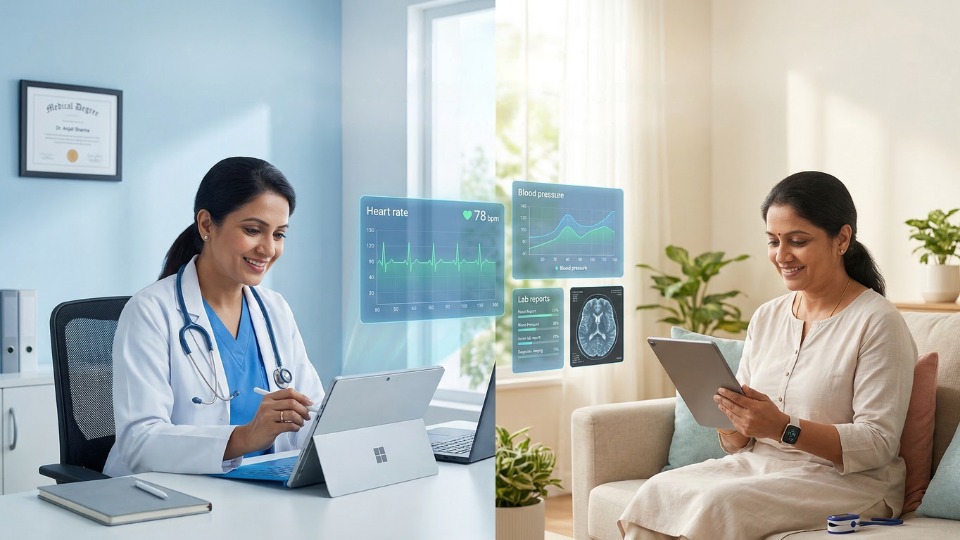
The role of the telemedicine has changed drastically because of the advancements in the technology of networks and interfaces. Telemedicine is now accepted as an established part of everyday healthcare practice such as in the cardiology, dermatology, oncology, and pre- and postoperative surgical care. It is also widely used in medical training and education and it also helps in connecting the parties over long distances. Factors such as age, gender, socioeconomic status, technological literacy, ethnicity, and preferred language are some of the demographic factors which help in the engagement of the telemedicine for the patients. Several modes are used in the telemedicine through which the care of the patient is taken such as text messages, video conferencing, phones to various websites, apps, gaming programs, robots, and virtual reality and this in turn ensures that effective healthcare access to every individual. With the increasing demand, telehealth reimbursement policies became insufficient quickly.
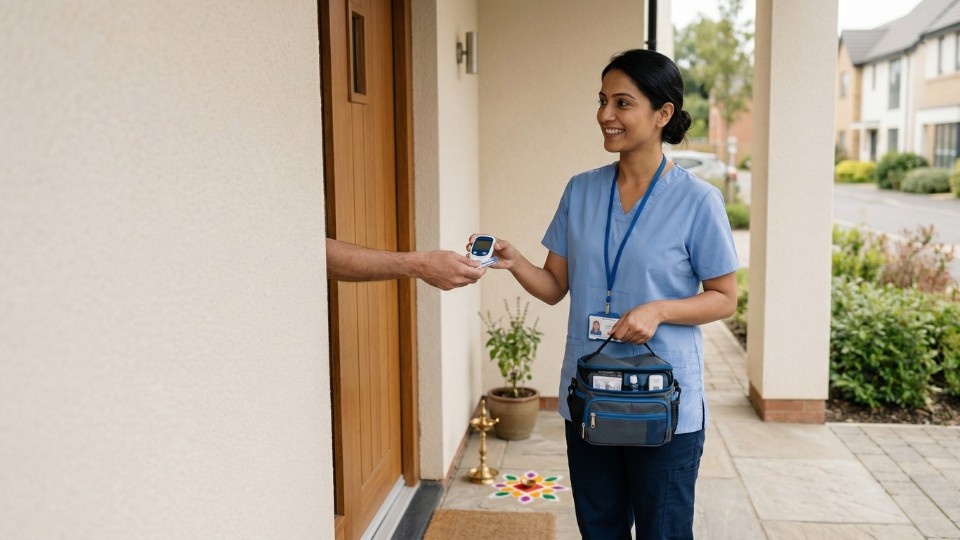
The new era in the healthcare delivery has been achieved by the advent of the telemedicine which is going actively with the passage of time. The substantial gain in the popularity of telemedicine is due to the technologies it uses to provide the best healthcare to the individuals. Its applications include remote monitoring, mobile health applications and real-time video consultations provided by the health care experts to the patients. This change brought the significance changes and revolution during the outbreak of Covid-19 pandemic and acted as the active catalyst for the integration and rapid adoption of the telemedicine into the mainstream practices. Telemedicine has solved many challenging issues in healthcare such as geographical barriers, and need for the routine medical care. It also reduces the travel of the patients in the underdeveloped areas over the long-distances which in turn reduce the cost. It also helps in the continuous monitoring and follow-up of the health of the patient. Increased patient engagement and adherence to treatment plans became so easy due to the flexibility of telemedicine. The impact of the telemedicine is not uniform and it depends on the factors such as digital literacy, access to technology and socioeconomic status. In order to ensure the effective implementation of the telemedicine it is important to understand the benefits and limitations for the healthcare providers, stakeholders and policymakers.
Various fields including cardiology, dermatology, mental health, and primary care have shown critical and effective results in the past and it helps in improving the outcomes of the patient’s health. Through virtual consultations and regular remote monitoring it has improved the status of the chronic diseases such as hypertension and diabetes essentially needed for the improvement in the health care field. The potential to reduce hospital admissions and improve triage efficiency is made possible by integrating telemedicine into emergency care.
By the integration of the advanced technologies in the healthcare digital health is transforming the healthcare effectively in order to make it more efficient, personalized and accessible and it turn reduces the healthcare cost as well. The major challenges faced by the digital health include the cybersecurity risks, inequitable access to technology and data privacy. It has revolutionised the field of health care and its management especially for patients suffering from cancer and chronic illnesses. It has improved the participation of the patient and enabled the remote monitoring and care about the health of the patient. In the late 20th century the advent of the internet has changed the development of advanced digital health solutions such as portals for the patients online and telehealth services development. The expansion in the mobile health applications in the 21st century has changed the patient’s mind-set to maintain the health of the patient. Besides all these advantages it faces some challenges as well such as data privacy, interoperability between electronic health systems, security concerns and the evidence-based validation of digital interventions. In order to ensure that digital solutions are innovative and practical also addressing these issues is so important and it is beneficial for the health care providers and patients as well.
Tools of the wearable technology such as fitness trackers and smartwatches monitors the health metrics and deliver real-time data to patients and health care providers. They also monitor the important parameters such as sleep patterns, vital signs for improvement etc by monitoring the real-time data that helps to improve the treatment decisions and support symptom management. Fall detection and electrocardiogram monitoring is incorporated by the specific wearable devices. To enhance user experience and facilitate health prediction or personalized recommendations researchers are investigating artificial intelligence (AI) and augmented reality into wearable technology to enhance user experience. For the continuous monitoring and treatment the therapeutic devices such as insulin pumps implantable cardiac pacemakers and deep brain stimulation devices are used effectively.
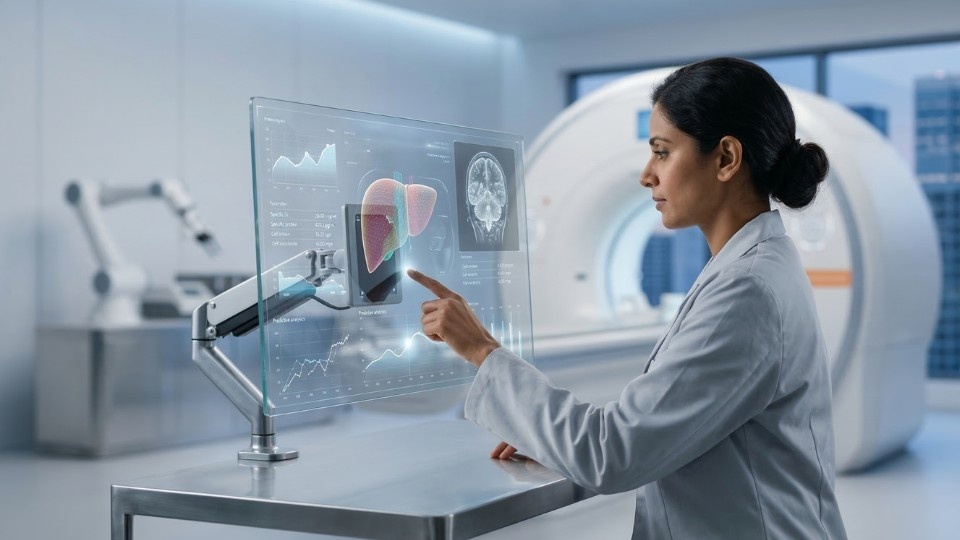
Patients can monitor their health status by using their mobile apps through the use of the Mobile health applications and sensors in conjunction with clinical team members and support from the friends and family as well also they help the patients to enhance their engagement by providing medication reminders, monitoring treatment schedules, and delivering educational resources specific to the disease and treatment options. The development in the field of Artificial Intelligence (AI) and Machine learning have revolutionised the diverse possibilities in the field of healthcare. The various aspects of medical practice, from early detection of the diseases to the accurate diagnosis and the planning of the treatment all has been made easy with the evolution of these two domains. The comprehensive and detailed visual information about the human body is provided by the medical imaging techniques such as Computed Tomography (CT), Magnetic Resonance Imaging (MRI), and Positron Emission Tomography (PET), vast amount of the data is generated by these techniques that require efficient analysis and interpretation, which is very well aided by the AI.
Across the entire healthcare spectrum, Artificial intelligence (AI) is rapidly emerging as a transformative force, which offers the opportunities to enhance clinical efficiency redefine medical practices and improve the outcomes for the patient. Artificial Intelligence (AI) and machine learning algorithms are the computational powers which are required for interpreting the complex biological datasets. Correlations within genomic, proteomic, and metabolomic data and the intricate patterns can be identified by these technologies and these are imperceptible to human analysis. To forecast disease risk with increasing accuracy, predictive profiles can be built by the AI models from the historical data. More personalized and pre-emptive healthcare strategies are enabled by the predictive diagnostics across various medical fields around the world. Precision therapies, reduce medical errors, and enhance subject enrolment in clinical trials suggest that AI has the potential to optimise the care trajectory for chronic disease patients. Within the pathology, dermatology, radiology these have been successfully applied in image analysis and helps to achieve the diagnostic at a speed that is very accurate and more than in the normal diagnostic practices.
Pros of telemedicine
· Secure and smooth transfers of patients’ protected health information.
· Coordination between primary care physicians and specialists.
· Reduces the wait for feedback.
· Unnecessary patient travel time.
· In person examinations for referrals.
· Require laboratory diagnostics or physical examinations.
· Bridge the gaps between urban and rural medicine.
· Decreased wait times.
· Crucial developmental follow-up care.
Cons of telemedicine
· Lead to missed diagnoses.
· Social and emotional connections between patients and providers are not the same.
· Interfere with the delivery of quality healthcare.
· New equipment may need to be purchased.
· Require full-time staff to manage.
· Various devices and network access necessary to successfully participate in a telehealth meet is needed essentially.
· Technological difficulties such as poor network connections.
· Equipment failures.
AI Clinical Support is so important due to following reasons:
- Scalable monitoring
- Data-driven decision
- Patient’s trust
- Reduction in Diagnostic errors
- Reduces the Operational costs
- Lowered Readmission rates
- Increased Clinician efficiency
Challenges faced by Telemedicine and Digital Diagnostics are:
· Data scarcity
· Noisy datasets
· Interpretability issues
· Data limit models
· Ongoing advancements in algorithms
· Ethics in medical domains
· Lack of Interoperable Health
· Regulatory Challenges
· Date processing
All these major challenges can be overcome by developing explainable AI models, to enhance the use of the digital diagnostic and telemedicine for the health care providers and patients. Thus in the healthcare sector digital health has become a transformative force by offering innovative solutions to improve patient care and healthcare delivery. to enhance the detection and management of diabetic retinopathy, Digital Diagnostics utilises artificial intelligence (AI). Ever-increasing cost and persistent health inequity set out to address the core issues of digital diagnostics. Critical questions about reimbursement codes and potential kickbacks are posed by the AI implementation through the financial model surrounding AI. Multiple diagnostic touchpoints ultimately leading to improved patient outcomes and a more efficient healthcare ecosystem is the main core theme and need of the hour for the telemedicine and Digital diagnostics.